
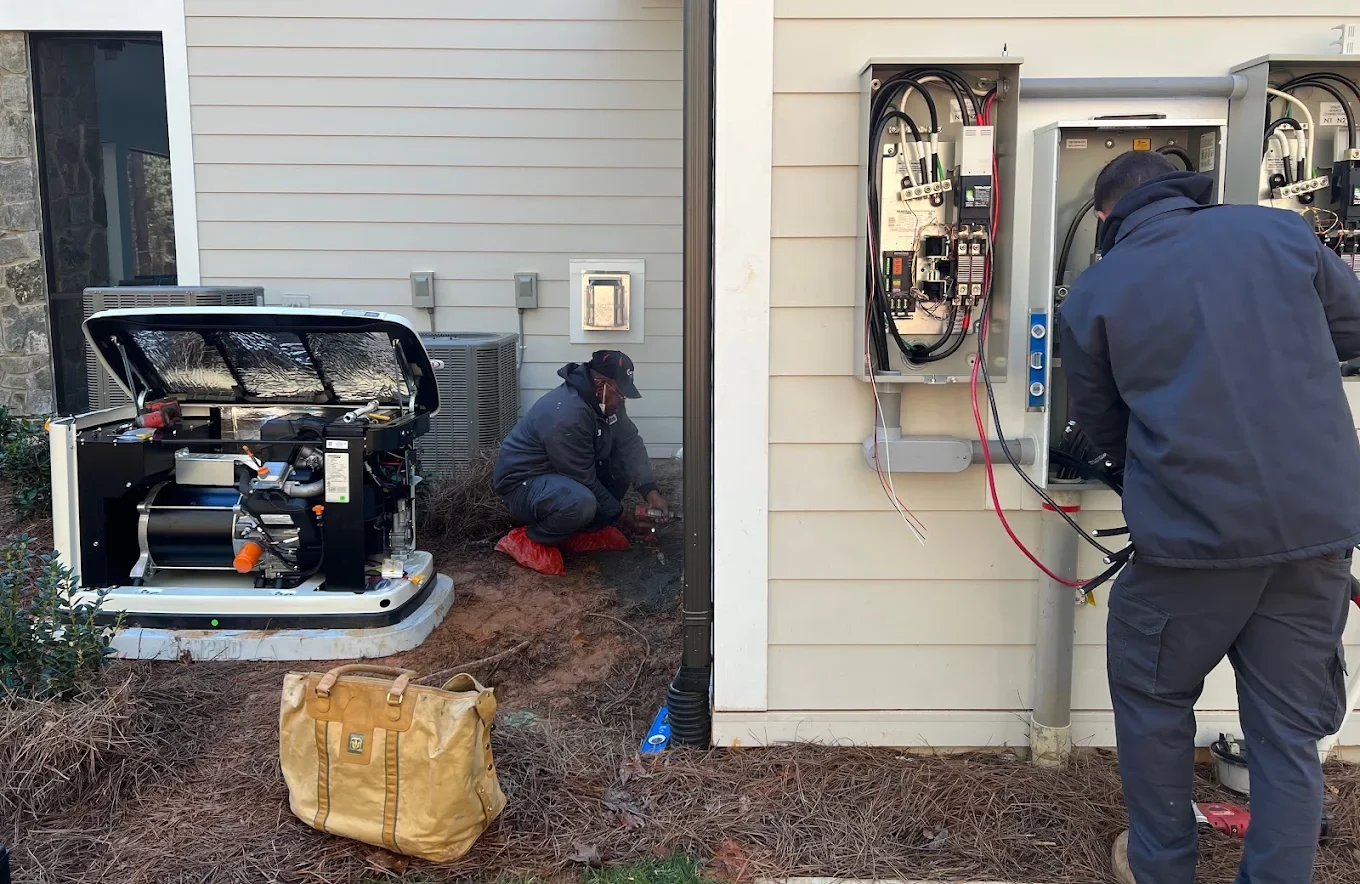
Most home equipment wears by being used, and a standby generator is unusual because it wears in two ways. It wears while it sits through months of quiet weather with only a short weekly self-test. It also wears while it runs, when an Upstate storm asks it to carry the house for a day or a week. Problems from either side compound, each making the next more likely. Here are six of them, three that grow while the generator is idle and three that grow while it runs, with where a Carolina Heating Service technician stops each one.
Why a generator that rarely runs still wears out
A machine used a few minutes a week seems as if it should age slowly, but most of what ages a generator is not hours of operation. Batteries lose capacity with time and heat, fuel systems drift, enclosures collect moisture and pests, and connections corrode in humid air. None of that shows in a weekly self-test, which runs the engine lightly and proves only that it will start, so idle-time wear accumulates out of sight until an outage turns it into a run-time problem.
Problems that grow while the generator sits
1. A weakening battery
The battery is the most common reason a standby generator fails to start, and it weakens every month regardless of use, faster in an Upstate summer that heats the enclosure. A weak battery turns the engine over more slowly, so each self-test works the starter harder and draws the battery down further, and the chain ends on an outage night with an engine that cranks and will not catch. A technician stops it with a load test at each yearly visit, the only test that shows whether the battery will turn a cold engine, and replacement on schedule.
2. A fuel system that has drifted
Natural gas and propane do not go stale, but the system that delivers them drifts. A regulator wanders out of range over years, a propane tank runs low between fills, and a shutoff valve closed for some reason is never reopened. A generator on low or uneven fuel pressure runs lean and surges under load, which stresses the engine and sends unstable power to every control board in the house. A technician stops it by checking pressure at the regulator under load, since the problem often hides at rest.
3. An enclosure that has filled with the outdoors
A generator cabinet is warm, dry, and sheltered, which is what mice and wasps want in a Greenville winter. Nests foul the air intake, chewed wiring takes out sensors, and pine straw against the louvers blocks the cooling air, while humid air corrodes the terminals inside. A blocked intake makes the engine run hot, heat speeds the corrosion, and corroded connections heat further under load. A technician stops it by opening the cabinet, clearing what moved in, cleaning and tightening the connections, and clearing the space around the unit.
Problems that grow while the generator runs
4. Oil that a long run used up
A generator running a few minutes a week uses little oil, and one carrying a house for several days uses a lot, as the Upstate learned after Helene in 2024. Low or overdue oil protects the engine less every hour, so wear speeds up on the second and third day of an outage, and worn parts then burn oil faster. A technician stops it with the yearly oil and filter change and, after any outage longer than a day or two, by counting the next interval in hours run rather than months.
5. A clogged air filter and a tired ignition
A long run degrades both the air and the spark. The air filter loads faster under full load than during any self-test, a restricted filter makes the engine run rich, a rich engine fouls the spark plugs, and fouled plugs make it run rougher and load the filter further. The signs are an engine that surges or smokes and lights that will not hold steady. A technician stops it by replacing both at the yearly service and after a long outage.
6. Transfer switch contacts that carried the load
The transfer switch hands the house to the generator when the power fails, hands it back when stable power returns, and keeps generator power out of the lines where crews are working. Every transfer and every restoration surge wears its contacts. Pitted contacts heat under load and eventually fail to transfer, so the generator starts and the house stays dark, or utility power returns and the generator keeps running. A technician stops it by inspecting the switch at the yearly service, which a self-test never touches.
Why the two kinds meet on the same night
Idle-time and run-time problems are not separate. A battery weakened by a hot summer starts the engine slowly on the night of an ice storm, a drifted regulator makes it surge under load, a blocked intake makes it run hot, and old oil protects it less, so a generator that seemed fine in its self-test struggles on the first full day of an outage. Our posts on watching one self-test from start to finish and on warning signs before, during, and after an outage cover what a homeowner can see along the way.
Stopping the chains before the storm does
Carolina Heating Service has served Greenville and the Upstate since 1981 and installs and services standby generators across the region, with the transfer switch wiring under the same roof. If your generator has gone more than a year without service, or carried the house through a long outage and has not been looked at since, schedule a visit online or through the 24/7 website chat. The visit includes a battery load test and a run under full load, it is recorded on video, any repair is priced before the work, and members of the Carolina Comfort Club receive priority service when a storm fills the calendar.