
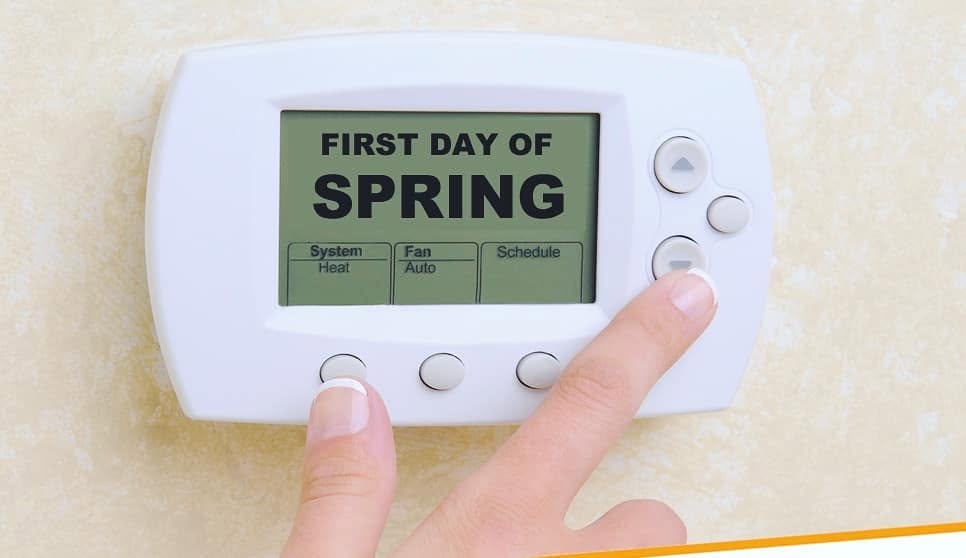
Spring in the Upstate asks three things of a house at once. It asks the cooling system to start a season that will run into October. It asks the drains and the crawl space to handle spring rain on red clay that does not let it through. And it asks the outdoor water, the spigots, the hoses, and the irrigation, to come back to work after a winter of freezes. Each of those is a short list, and this checklist is arranged around them, with the items you can do in an afternoon and the ones that belong to a technician marked plainly.
Cool it, before the first hot week
- Replace the filter, which carries a spring’s worth of Greenville pollen, and check it monthly through the season.
- Set the thermostat to cool and run the system for twenty minutes, confirming cool air at every vent. A house that cools but feels sticky is a coil or a charge that needs a technician.
- Clear two feet around the outdoor unit and rinse the pollen film off the coil gently with a hose.
- Listen when the system starts, since a hum before the fan catches or a click that repeats is a capacitor or contactor with a summer left in it at best.
- Look at the drain pan under the indoor unit for water or a musty smell, and at the ceiling below an attic air handler for staining, since the condensate line clogs with algae every summer here and spring is the last dry month to have it cleared.
- Book the spring tune-up, which measures the refrigerant charge, tests the capacitor and contactor under load, cleans both coils, and records the readings on a system report card.
Drain it, during the spring rains
Spring rain on Piedmont clay drains slowly, and the crawl space under many Greenville homes holds water against the joists for weeks after a wet spell. Drainage is the job spring asks that nobody thinks about until the floor above goes soft.
- Take a flashlight under the house once this season and look for standing water, damp soil under one pipe run, fallen insulation, or rusted hangers. Dampness everywhere is the water table, while dampness under one pipe is a leak.
- If the space stays wet, a sump pump keeps it drier, and if one is installed, lift the float or pour water into the pit to confirm it runs before the summer thunderstorms.
- Clear the gutters of the oak and pine litter that spring drops and confirm the downspouts carry water away from the foundation, since water that pools at the wall ends up under the house.
- Run every indoor drain and watch it empty, because a sink that drains slowly in April stops in June when the house fills with guests, and drain clearing is a short visit now.
- Put a few drops of food coloring in each toilet tank and wait fifteen minutes; color in the bowl is a flapper leaking around the clock.
Water it, after a winter of freezes
The Upstate sees more freezing nights than the rest of the state, and the damage a freeze does to an outdoor line often shows itself only when the water comes back on in spring.
- Turn each outdoor spigot on and watch for drips at the handle or the wall, and listen for water running inside the wall, which means a pipe split in the winter and has been waiting for pressure.
- Reconnect the hoses and run the irrigation system zone by zone, watching for heads that flood or fail to rise and for a backflow preventer that leaks, since it sits above ground and freezes first.
- Turn each shutoff valve under the sinks a quarter turn and back, so none seizes before the day you need it.
- Flush a few gallons from the water heater’s drain valve until the water runs clear, and read the manufacture date on the label, since a tank past ten years deserves a plan before the summer of guests and laundry.
- If your home is on a well, as many are in rural Greenville, Anderson, and Laurens counties, listen to the pump cycle with nothing running. A pump that starts on its own is a leak or a failing pressure tank, and our well and water line team can find which.
What the technician’s half covers
The lists above tell you whether the systems run. A spring visit from Carolina Heating Service tells you whether they will still be running in September, with instruments a homeowner does not have. On the cooling side that means the readings on the report card; on the plumbing side it means water pressure at the main and the fixtures, the water heater’s anode rod and relief valve, a look at the exposed pipe in the crawl space, and a camera inspection of any drain that has been slow. Because Carolina Heating Service handles both trades, the whole checklist can be covered in one visit, with the price of any repair presented before the work and the visit recorded on video.
Why April beats June
The first heat wave in the Upstate fills every schedule in Greenville on the same afternoon, and the summer thunderstorms that fill crawl spaces arrive soon after. A visit in April is a convenient appointment on a mild day, and members of the Carolina Comfort Club receive priority service when the calendar fills, along with the spring tune-up as part of the plan. Carolina Heating Service has served Greenville and the Upstate since 1981; schedule online or through the 24/7 website chat, and one call will handle all three lists.