
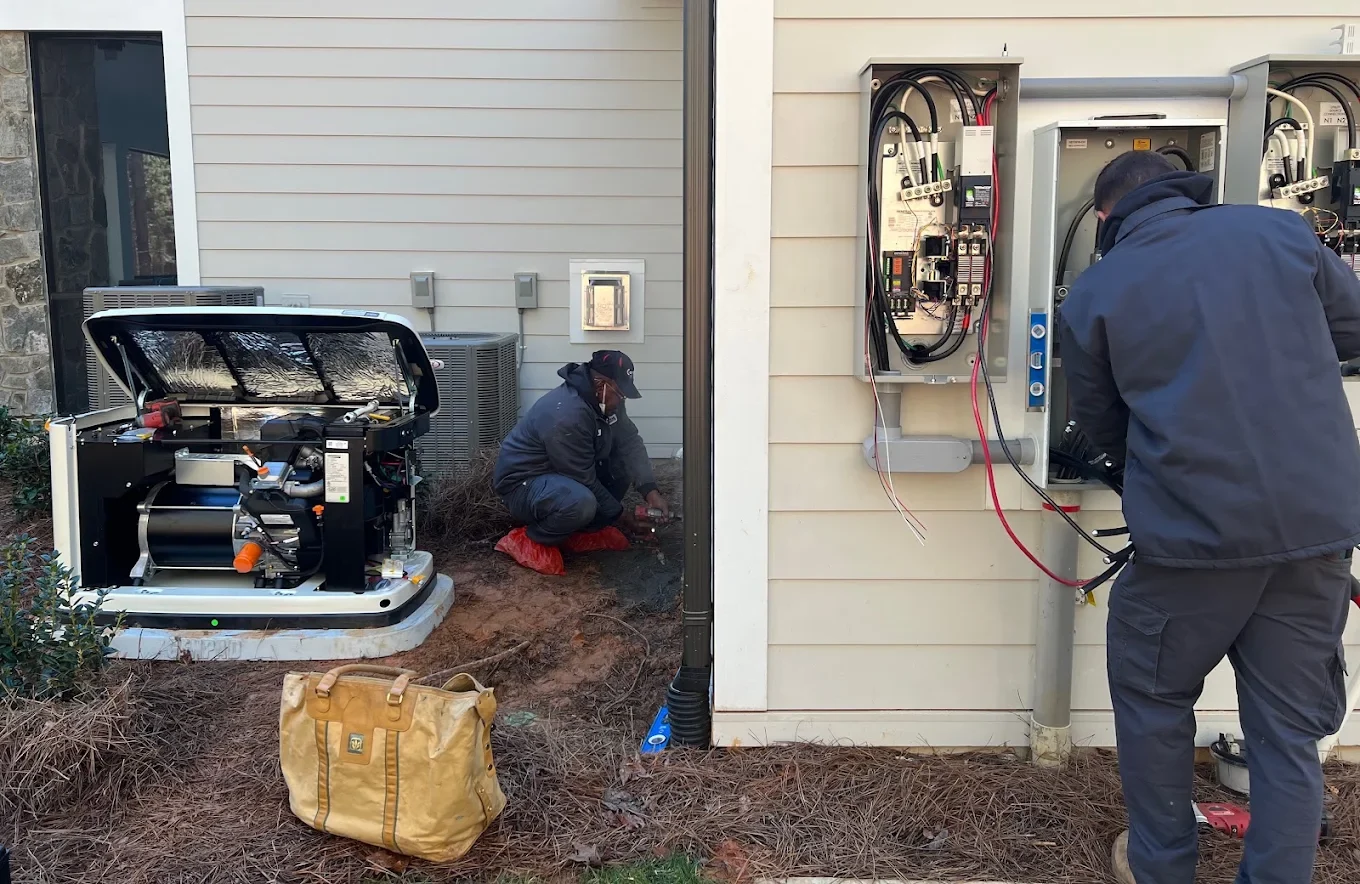
A transfer switch is the device that connects your generator to your home’s wiring safely. It sits between the utility service, your electrical panel, and the generator, and it makes sure only one source powers the house at a time. Without it, a generator connected to the home can push electricity backward through the meter and onto the utility lines, where it can injure or kill a line worker who expects those lines to be dead. The National Electrical Code requires transfer equipment for any generator connected to a building’s wiring, and a permanently installed home generator is never complete without one.
After the remnants of Hurricane Helene took down lines across the Upstate in September 2024, utility crews from across the Southeast spent days working on circuits that were supposed to be de-energized. Every improperly connected generator on those circuits was a live hazard to them. The transfer switch is what makes a home generator safe for the people outside your house as well as the people inside it.
What a Transfer Switch Does
Under normal conditions, your home draws power from the utility through the main breaker. When the power fails, the transfer switch disconnects the home from the utility line and then connects it to the generator. When utility power returns, it reverses the process: it disconnects the generator, reconnects the utility, and signals the generator to shut down. The two sources are never connected to the house at the same time, which protects the generator from being destroyed when the grid comes back and protects the grid from being energized by the generator.
Why Backfeeding Is So Dangerous
A generator plugged into a wall outlet through a double-ended cord, sometimes called a suicide cord, sends power into the home’s wiring and out through the meter. The transformer on the pole that steps utility voltage down to household voltage works in reverse too, so a 240-volt generator can energize the distribution line at thousands of volts. A line worker who has confirmed the line is dead from the substation side has no way to know a homeowner three streets over is feeding it. Backfeeding also means the generator is trying to power the whole neighborhood, which overloads it the moment the cord is connected. Transfer equipment exists to make both outcomes impossible.
Automatic vs. Manual Transfer Switches
A manual transfer switch requires a person to start the generator and move the switch when the power fails, and to reverse the steps when it returns. It works with a portable generator connected through a proper inlet, and it is the lower-cost option, but it only works if someone is home, awake, and able to operate it. An automatic transfer switch monitors the utility feed around the clock, detects an outage, signals a standby generator to start, and transfers the home once the engine is running, usually within 10 to 30 seconds. When utility power returns and holds steady, it transfers back and shuts the generator down. That is why a standby home generator installation pairs the unit with an automatic switch, and why the refrigerator keeps running whether you are home or at the beach.
What Gets Power During an Outage
The transfer switch also decides which circuits the generator feeds. A whole-house switch sends the generator’s full output to the main panel so every circuit works, with load management modules that briefly shed large loads like a second air conditioner if the generator approaches its limit. A smaller installation uses the transfer switch to feed a separate subpanel with selected circuits: the HVAC system, the refrigerator, the well pump, the sump pump, lighting, and the garage door. Which approach fits your home depends on the generator’s size and what you decide matters most, and that decision is far easier to make during the installation than during the storm.
Permits, Code, and the Utility
In Greenville County, the City of Greenville, and the surrounding Upstate jurisdictions, a transfer switch installation requires an electrical permit and inspection because it connects to the service equipment. The inspector confirms the switch is rated for the service, grounded correctly, and installed so the generator can never parallel the utility. Some utilities also ask to be notified when a permanently connected generator is installed. A licensed installer handles all of it, and the paperwork becomes part of the record a future buyer will want to see.
Maintenance a Transfer Switch Needs
The switch has few moving parts, but those parts need to move. A standby generator runs a weekly self-test, and some systems exercise the transfer switch during that test so the contacts do not seize. Annual generator service includes checking the switch for loose connections, corrosion, and worn contacts. A switch that has not transferred in years can stick in one position, which leaves a perfectly good generator running while the house stays dark.
Getting Set Up Correctly From the Start
Homeowners across Greenville and the Upstate have trusted Carolina Heating Service since 1981, and our technicians install standby generators with the transfer switch, the fuel connection, and the permit handled as one complete, inspected system. Every technician completes a multi-month training program at hire, and every installation carries a one-year workmanship warranty with free callbacks within 30 days. Schedule a generator consultation online or reach us through 24/7 website chat, and we will make sure your backup power is safe from the first outage.
Frequently Asked Questions
Can I use an interlock kit instead of a transfer switch?
An interlock kit is a code-recognized mechanical device that prevents the main breaker and a generator breaker from being on at the same time, and it works with a portable generator connected through a proper inlet. It still requires a permit and a licensed installation, and it is manual, so someone has to be home to start the generator and move the breakers. A standby generator uses an automatic transfer switch instead.
How fast does an automatic transfer switch restore power?
Most residential systems detect the outage within seconds, start the generator, and transfer the home once the engine stabilizes, typically within 10 to 30 seconds. Lights and the refrigerator pick back up almost immediately. Sensitive electronics may still benefit from a battery backup to cover those seconds.
Will a transfer switch power my whole house?
The generator’s size decides that, not the switch. A whole-house transfer switch sends the generator’s full output to the main panel, and load management modules can shed large loads such as a second air conditioner so a smaller generator still covers the home. A smaller installation feeds a subpanel of selected circuits instead.
Does a transfer switch need a permit in Greenville County?
Yes. A transfer switch connects to the service equipment, so it requires an electrical permit and inspection in Greenville County, the City of Greenville, and the surrounding Upstate jurisdictions. Some utilities also ask to be notified of a permanently connected generator, and your installer handles both.
What maintenance does a transfer switch need?
The switch has few moving parts, but it should be exercised during the generator’s weekly self-test and inspected annually for loose connections, corrosion, and worn contacts. A switch that has not transferred in years can stick, which leaves a working generator unable to power the house. Annual generator service covers it.