
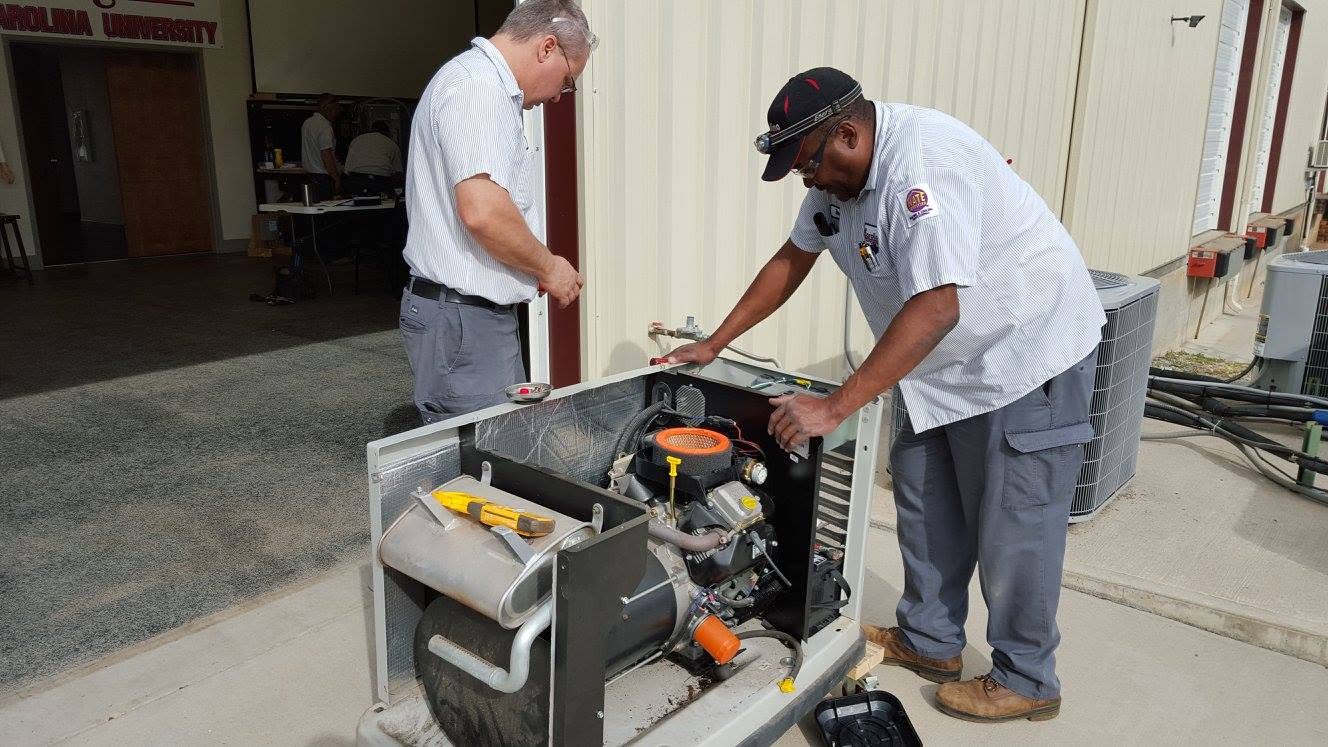
A home generator spends most of its life doing nothing, and then a storm asks it to start on the first try and run for days. Because it is not used every day, the only way to know it is ready is to maintain it and to know what its signals mean. Most standby generators run a weekly self-test that will surface some problems, but a maintenance plan is the proactive version of that, catching the issue before the self-test does. If your generator is not on a maintenance schedule, here are the signs that it is overdue, sorted by when they appear: before an outage, while the generator is carrying the house, and after it shuts down.
Before an outage, at the self-test and the enclosure
The earliest signs show up during the weekly exercise cycle, if you are listening. A generator that starts slowly, cranks for several seconds, or takes two or three tries to catch has a battery losing strength, a dirty spark plug, a clogged air filter, or, on a portable unit, fuel that has gone stale, and the only way to know which is a maintenance visit. A generator that starts and then shuts down again during the self-test is telling you the same thing more urgently. And a generator you cannot remember hearing at all is the most important sign on this list, because a unit that has stopped exercising will not start in an outage either. Check the controller’s status light, where green means ready, yellow or amber means maintenance is due or a minor fault is logged, and red means a fault that will keep the unit from starting. Outside the cabinet, oil or coolant stains on the pad mean a leak that a long run will turn into an engine problem, and pine straw, leaves, or a wasp nest against the louvers mean the unit cannot breathe.
During an outage, what the house tells you
When utility power fails and the transfer switch hands the house to the generator, the household is relying on the unit to deliver the same steady power the utility did. If it is not, the house will show you. Lights that flicker or fail to hold a steady brightness, appliances that hum loudly, flicker, or shut off while running, a heating and cooling system that short cycles, and electronics that will not stay on are all signs the generator is delivering unstable voltage, which points to a fuel supply problem, a worn engine component, or a transfer switch with damaged contacts. Unstable power is hard on everything connected to it, so a house that behaves this way on generator power should be on the list for a service visit as soon as the outage ends rather than at the next scheduled one.
During an outage, what the generator tells you
The unit itself gives its own signs while it runs. An engine that surges up and down, runs rough, or produces visible exhaust smoke is telling you about the fuel system, the air filter, the spark plugs, or the oil, and on a natural gas or propane unit a fuel pressure problem at the regulator shows up the same way. Any of these gets worse under a full load, which is the load the generator exists for, so a unit that ran a little rough during a five-minute self-test may not run at all through a four-day outage. If you see oil on the ground under a running generator, or smell fuel, shut it down when it is safe to do so and call.
After an outage, the run it just finished
The sign people miss is the one that feels like good news. A generator that carried the house through a multi-day outage did more work in that week than in the previous year of self-tests combined. It consumed oil, wore the air filter, ran the battery through repeated cycles, and may have logged faults on the controller that nobody saw. After any outage of more than a day, look at the controller for fault codes, look under the enclosure for oil, and count the interval to the next service in hours run rather than months on the calendar. Homeowners across the Upstate learned this after Helene in 2024, when generators that had run for a week or more were asked to do it again before anyone had changed the oil.
What the yearly service covers
A generator maintenance visit addresses every sign above while it is still small. The technician changes the oil and filter, replaces the air filter and spark plugs as needed, tests the battery under load and replaces it on schedule, checks fuel pressure and the regulator, cleans and tightens every connection, inspects the enclosure for leaks, pests, and debris, reviews the controller’s fault log, inspects the transfer switch, and runs the unit under a full load, which is the only test that shows whether it will carry the house. Every technician completes a multi-month training program at hire, the visit is recorded on video, and any repair comes with the price presented before the work and a one-year workmanship warranty.
Keeping the generator ready
Carolina Heating Service has served Greenville and the Upstate since 1981 and installs and services standby generators across the region. If your generator is showing any of the signs above, or you cannot remember its last service, schedule a visit online or through the 24/7 website chat. Members of the Carolina Comfort Club receive priority service when a storm fills the calendar, and the best day to find out whether a generator will start is a quiet one in the off-season rather than the first night of the next storm.