
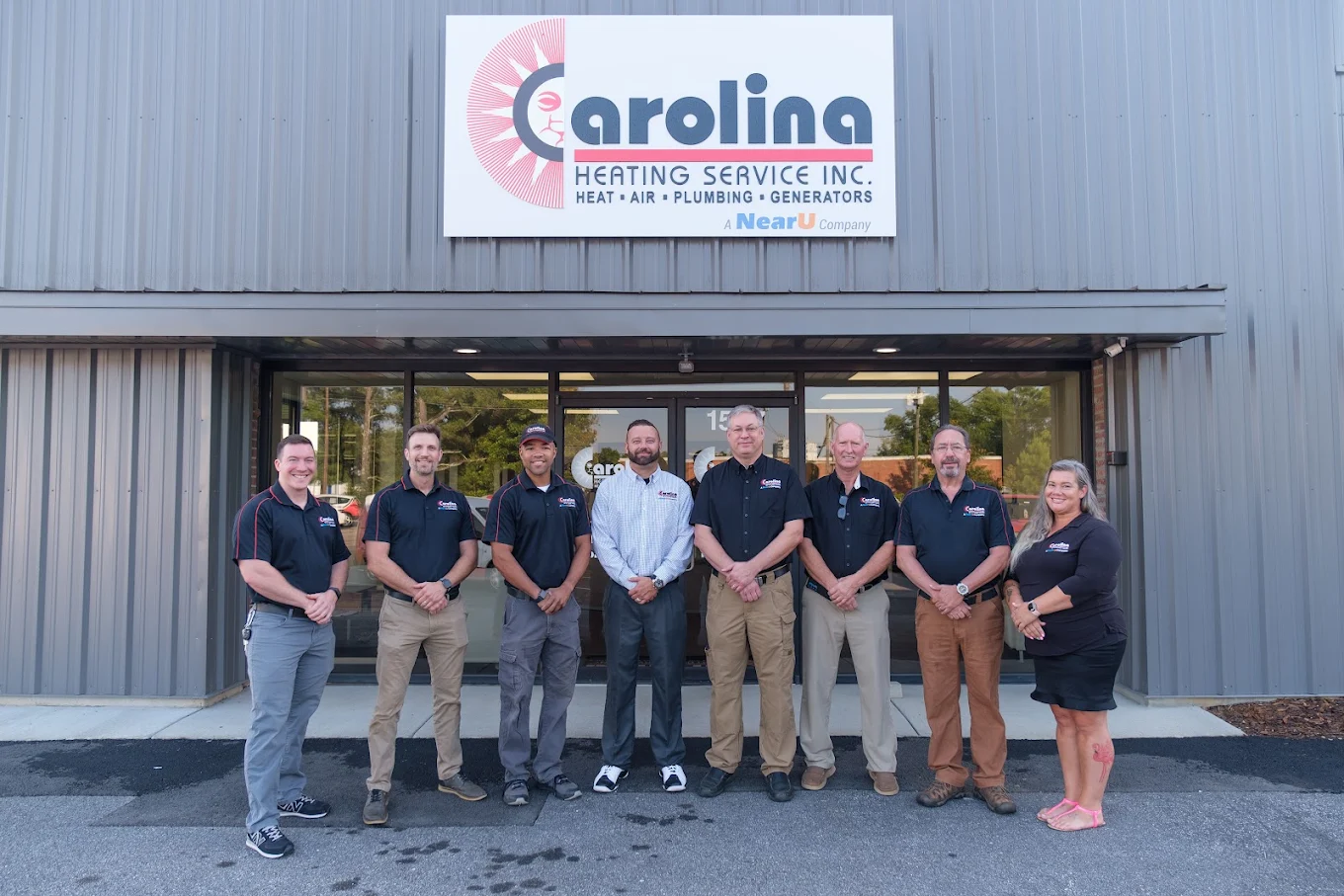
Every Carolina Heating Service truck, invoice, and web page carries a South Carolina contractor license number, and most homeowners never give it a second look. That is understandable when the air conditioner has quit in July. It deserves a look anyway, because that license is what stands behind the work when something goes wrong. Carolina Heating Service works in four trades, heating and cooling, plumbing, electrical, and generators, and the license means something specific in each. This post takes the four in turn and closes with how to check any contractor’s license in a minute, ours included.
What a South Carolina contractor license is
In South Carolina, residential heating, air conditioning, plumbing, and electrical work is licensed through the Contractor’s Licensing Board under the Department of Labor, Licensing and Regulation. The license is issued to the company, carries the classifications for the trades it is qualified to perform, and is kept current with the state. Holding it requires a qualifying party who has passed the state’s trade and business examinations, evidence of financial responsibility, and insurance, and the board can fine, suspend, or revoke a license for work that violates the code. The record is public, which is the part that matters most to a homeowner.
Heating and cooling: the warranty and the refrigerant
Licensed heating and cooling work means a new system is permitted and inspected by the local authority, refrigerant is handled by technicians who hold the federal EPA Section 608 certification the law requires, and the manufacturer’s parts warranty, which most makers condition on licensed installation, stays in force. A compressor claim denied in year six for an unlicensed install is an expensive way to learn that. Every technician at Carolina Heating Service completes a multi-month training program at hire, and every visit is recorded on video with the readings on a report card.
Plumbing: the permit and the inspection
Licensed plumbing work means gas lines are pressure tested and inspected, water heaters are installed with the relief valves and venting the code requires, and sewer and water line work meets the standard the local inspector enforces. In the Upstate, where many homes carry the polybutylene, galvanized steel, and cast iron of earlier decades, a repipe or a sewer repair is exactly the kind of job where an unpermitted shortcut surfaces years later at a home sale or an insurance claim. Our plumbing work is permitted wherever the code requires it.
Electrical: the fire you never see
Electrical is the trade where licensing matters most for safety, because the failure mode of bad electrical work is fire behind a wall. A licensed electrician pulls a permit for a panel upgrade, a new circuit, or a rewiring, and the inspection that follows is a second set of eyes on work that a homeowner cannot see once the drywall is closed. In Greenville’s older neighborhoods and mill villages, where knob-and-tube and aluminum wiring are still found, a licensed hand on the panel is the difference between a house that is safer afterward and one that only looks it.
Generators: where the four trades meet
A standby generator is the trade where the four meet, since it involves a gas or propane connection, a transfer switch wired into the panel, and a permit and inspection for both. The transfer switch is a safety device as much as a convenience: it keeps generator power from flowing back into the utility lines where crews are working during an outage. A licensed installation is permitted and inspected like any other electrical work, and after Helene in 2024 the Upstate saw what a week on generator power asks of an installation. Our generator installations run under one license for the electrical and the fuel work.
What unlicensed work leaves out
The lower quote from an unlicensed individual is lower for identifiable reasons, and each is something a homeowner would want on the day the work fails. No license means no state examination and no board to answer to. No permit means no inspection. No insurance means an injury on your property or damage to your home is yours rather than the contractor’s insurer’s. And a refrigerant charge set by feel, a gas line without a pressure test, or a transfer switch wired without a permit can look fine for a season and fail in a way that costs many times the difference in the quotes.
How to check any contractor in a minute
- Ask for the license number before anything is scheduled, since a licensed contractor keeps it on the truck, the paperwork, and the website and is glad to be asked.
- Look it up on the South Carolina LLR license lookup, which shows whether the license is active, which classifications it carries, and whether the board has taken action against it.
- Ask whether the job will be permitted, because for any new system, gas line, panel work, or generator installation the answer should be a plain yes.
- On a large job, ask to see the certificate of insurance, and on any refrigerant work, the technician’s EPA 608 certification.
- Be cautious of a quote well below the others, since the gap is usually what the license requires and the quote omits.
The license at Carolina Heating Service
Carolina Heating Service has held its South Carolina contractor license through more than four decades of work in Greenville and the Upstate, and the number on our trucks is the one to look up. Every job carries a one-year workmanship warranty with callbacks free within 30 days, new systems carry a 10-year parts and labor warranty, and the price is presented before the work begins. If you are comparing contractors for a repair, a replacement, or an installation in any of the four trades, start with the license lookup and then compare the quotes; schedule online or through the 24/7 website chat, and same-day repair service is available by phone.