
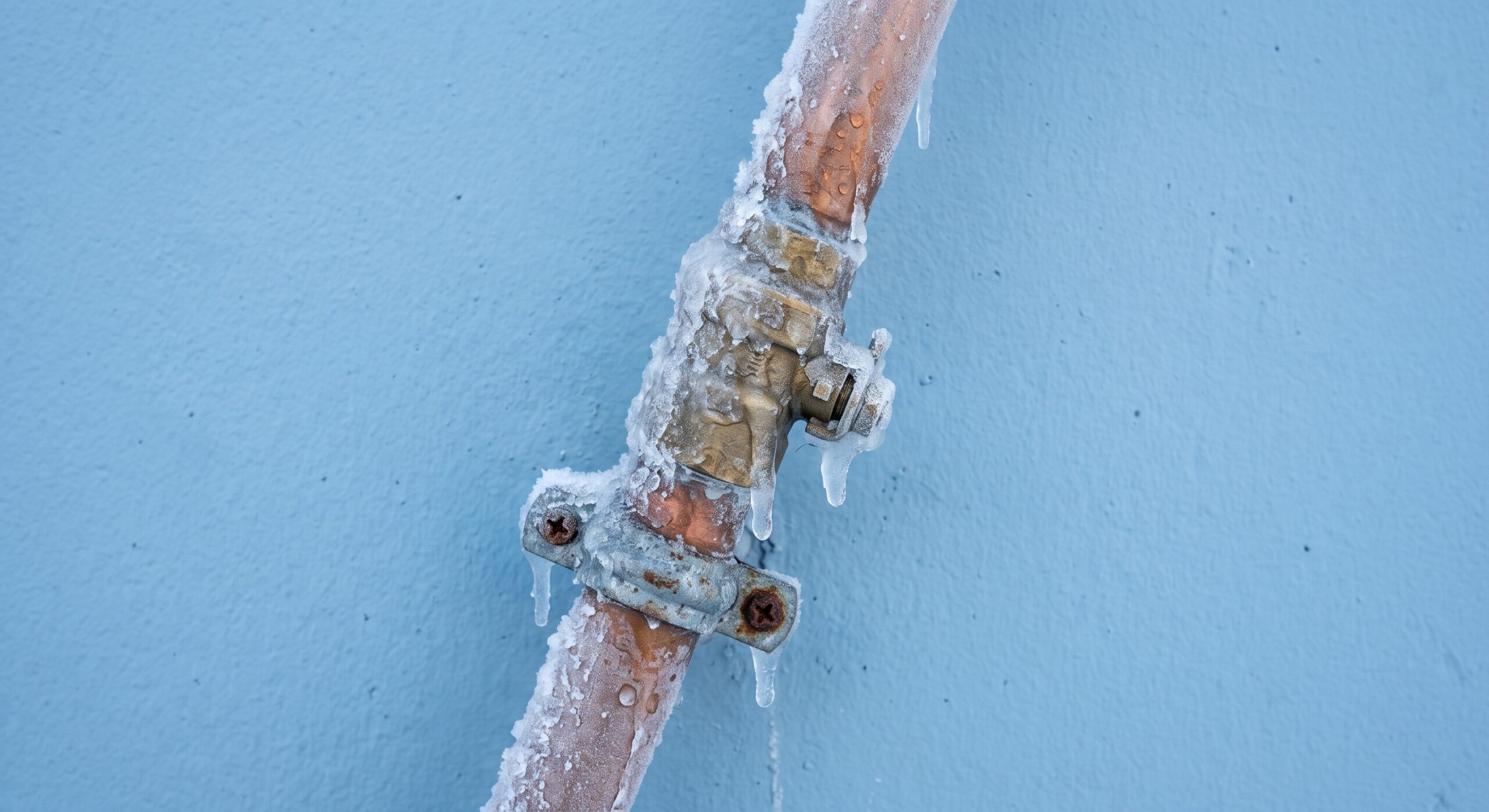
Greenville does not typically get winters that make the news, but it gets more freezing nights than anywhere else in South Carolina. A handful of them each year drop hard enough to split a pipe. Homes here were built for a long cooling season, so the pipe insulation that is standard farther north is often missing. A single hard freeze finds the lines that were never protected. Most frozen and burst pipes are preventable. Prevention comes down to three lines of defense: keeping the cold off the pipe, keeping warmth on it, and giving the water somewhere to go if ice forms anyway. Here is how each works.
First, know which pipes are at risk
Not every pipe in the house is in danger, and knowing which ones are is a good part of the work. The risk concentrates in lines running along an exterior wall, including the ones behind sinks on an outside wall, in anything in an unheated crawl space, attic, or garage, in the outdoor spigots and the irrigation backflow preventer, and, for homes on wells in rural Greenville, Anderson, and Laurens counties, in the line from the well head. These are the lines that lose the warmth the rest of the plumbing gets from sitting inside a heated house, so walk the house once in the fall and take stock of where they are.
Keep the cold off the pipe
Foam pipe sleeves cost little and slide over exposed pipe in a crawl space or garage in minutes, trapping a thin layer of air that slows how fast the pipe gives up heat. For pipes inside an exterior wall, sealing the gaps and drafts where the pipe enters the wall does nearly as much as the sleeve, because it is the moving cold air that does the freezing. Outdoors, disconnect the garden hoses before the first freeze, drain the spigot, and fit an insulated cover over it, since a hose left connected traps water in the fitting and that water is usually the first thing to freeze. Close the foundation vents for the winter and shut down and drain the irrigation system.
Keep warmth on it
On a night forecast well below freezing, open the cabinet doors under sinks that sit against an exterior wall, so warmer room air reaches the pipes beneath. Hold the thermostat at a steady setting overnight rather than letting the house swing between day and night temperatures, and keep it at 55 or above even if you are away. If your home is on a well, confirm the heat lamp or the insulation in the well house is doing its job before the first cold snap. Pipes become vulnerable once the outdoor temperature stays below freezing for a stretch, usually overnight into early morning, and how much risk that creates depends on how exposed the pipe is.
Give the water somewhere to go
A pipe rarely splits because ice forms in it; it splits because ice forms at the coldest point, traps water between itself and a closed faucet, and the pressure in that trapped water climbs until a fitting gives way, and the third line of defense relieves that pressure. On the coldest nights, let a faucet fed by an exposed line run at a slow drip, since moving water is far less likely to freeze solid and the open faucet gives any pressure a place to escape, and a trickle is enough. If you will be away during a cold stretch, close the main valve and open a faucet to drain the lines before leaving.
Know where the main shutoff is
If a pipe does split, the first move is cutting off the water rather than calling a plumber, because every minute the main stays open is water running into the house. Every home has a main shutoff, usually near the meter, where the line enters the house, or in the crawl space, and it is worth finding in the fall, testing, and showing to everyone in the household.
If a pipe freezes anyway
A frozen pipe shows itself as a faucet that gives a trickle or nothing at all, sometimes with frost on the visible section. Leave that faucet open and warm the frozen section slowly with a hair dryer aimed at it, working from the faucet back toward the ice, and never use an open flame, which can scorch the pipe or start a fire in a tight crawl space. The difficult part is that you cannot tell from outside whether the ice has already cracked the pipe wall, so if you are unsure, shut off the main before the pipe thaws and have a plumber check it, because the split usually shows itself as the water starts moving again.
If a pipe has burst
Close the main shutoff, open a few faucets to drain the lines, and call. Carolina Heating Service’s frozen and burst pipe repair team serves Greenville and the surrounding Upstate, including Spartanburg, Anderson, and Pickens counties, and same-day repair service is available by phone. The technician will find the break, replace the damaged section, and check the rest of the run, since a hard freeze rarely damages one spot, and the visit is recorded on video. Older homes with galvanized steel lines, or with polybutylene, a gray plastic pipe used into the mid 1990s, tend to freeze in the same places winter after winter, and repiping the vulnerable runs usually costs less over a few years than repairing them one freeze at a time.
A pre-winter plumbing check
A pre-winter visit catches the exposed pipe you might not think to look for. Carolina Heating Service has served the Upstate since 1981, and members of the Carolina Comfort Club receive priority service when the first cold snap fills the calendar. Schedule online or through the 24/7 website chat, and getting a line looked at before the first hard freeze costs less than the repair after one.