
An air conditioner that stops working rarely does it for one reason, and a handful of different problems produce the same uncomfortable result: an uncomfortably warm house. Telling them apart from the living room is hard, but the calendar helps more than most people expect. An Upstate cooling system fails in different ways at different points in a season that runs from April into October. So this post is sorted by when the failure happened: the first hot week, the peak of summer, or the long tail of September. Find your week, and you will know roughly what you are dealing with before a technician confirms it, and what to check before you call.
Before anything else, three checks
- Confirm the thermostat is set to cool with the set point below the room temperature, and put in fresh batteries if the display is dim.
- Pull the filter, because one clogged with a spring’s pollen restricts airflow enough to freeze the indoor coil, and a frozen coil stops cooling entirely. Replace it, turn the system off for a few hours to thaw, and try again.
- Look at the breakers, and reset a tripped one for the outdoor unit or the air handler once, and if it trips again, leave it off and call.
In the first hot week, the parts that sat all winter
The first stretch of 90-degree days, usually in May, asks a system to do what it has not done since September, and the failures cluster around parts that sat idle. The outdoor unit hums but the fan does not turn, or the indoor blower runs while the outdoor unit stays silent, which is a capacitor that weakened over the winter or a contactor whose contacts corroded in the damp. The system runs but the house stays warm, which in May is usually the outdoor coil coated in Greenville’s spring pollen, blocking the airflow it needs to shed heat, or a slow refrigerant leak that developed over the off-season and only shows once the system is asked for its full capacity. These are the failures a spring tune-up exists to catch, and a first-hot-week breakdown is the most common reason a household joins a maintenance plan the following year.
At the peak of summer, the parts that wore out under load
By July every air conditioner in the Upstate is running for long stretches of the day, and the failures are about wear. A compressor that ran hot on a dirty coil since May trips its overload and will not restart, which is the expensive one. A capacitor that survived May fails on the first 100-degree heat index. Ice builds on the indoor coil or the refrigerant line, which sounds backward in July but is common: low refrigerant or restricted airflow drops the coil below freezing, condensation freezes on it instead of draining, and the ice blocks airflow further, so the problem worsens the longer the system runs. The condensate drain, which has been growing algae in Upstate humidity since May, clogs and the float switch shuts the system down with nothing mechanically wrong, and if the air handler is in the attic, a full pan comes through the ceiling. Peak-season failures are the ones that land in a full schedule, which is what priority service is for.
In the long tail, the parts that are simply tired
September and early October in Greenville are still cooling months, and the failures that arrive then are about age. Short cycling, where the system starts and stops in quick bursts rather than running a full cycle, traces to a thermostat misreading the temperature, a refrigerant charge that has drifted, or an electrical component struggling to keep the compressor running, and it is harder on the equipment than a normal cycle. A system that runs constantly without quite reaching the set point has lost capacity, often a compressor near the end of its life. Rooms that used to be comfortable and are not any longer point to a duct that opened in the attic over a summer of heat. A late-season failure on a system past twelve years is the moment to weigh a repair against a replacement, and the useful thing about September is that there is time to compare quotes calmly rather than take what can be installed soonest in a heat wave.
What the technician confirms
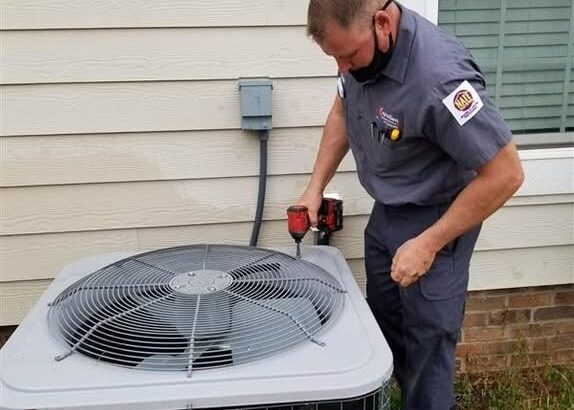
Each failure above has a reading behind it. A capacitor is tested against its rated charge, a compressor by its current draw, a refrigerant leak by pressures and temperatures on the lines, a dirty coil by the temperature split across it, and a duct problem by static pressure. A Carolina Heating Service technician takes those readings, walks you through what they show, and presents the price of the air conditioning repair before any work begins, with the visit recorded on video so you can see what was found. Every technician completes a multi-month training program at hire, and repairs carry a one-year workmanship warranty with callbacks free within 30 days.
Repair or replace
Most first-hot-week and many peak-season failures are repairs on a system with years left. A compressor failure, a refrigerant leak inside the coil, or any large repair on a system past twelve years is the point to weigh replacement, which carries a 10-year parts and labor warranty from Carolina Heating Service and, on a variable-speed system, runs longer and gentler cycles that handle Upstate humidity far better than the unit it replaces. Our post on which cooling system fits the house you have covers the choice, and financing is available.
Carolina Heating Service has served Greenville and the Upstate since 1981. If the three checks above did not restore the cooling, same-day repair service is available by phone, and members of the Carolina Comfort Club receive priority service when the season fills the schedule. You will receive a photo of your technician and an on-the-way message before arrival, and the price before the work begins.