
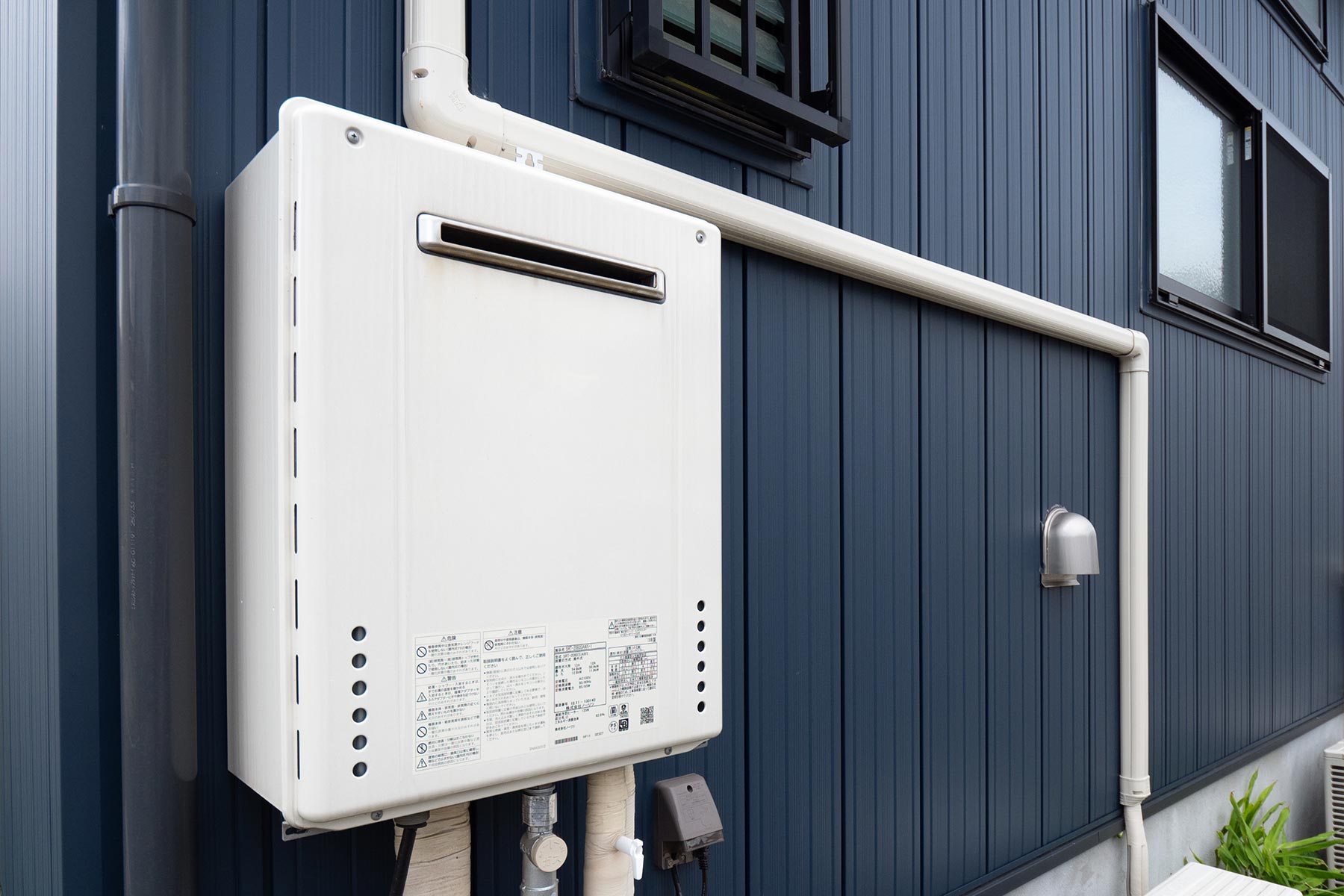
A tankless water heater is a good fit for many Upstate homes and the wrong fit for some, and the difference is in the house and the household rather than the brochure. So before a Carolina Heating Service technician recommends one, there are five questions to answer, and the answers point either toward a tankless unit or toward a well-installed tank.
First, what a tankless heater does differently
A conventional water heater keeps 40 or 50 gallons hot around the clock, reheating the tank every time it cools. A tankless heater holds no water at all. When a hot tap opens, water flows through the unit, a gas burner or electric element heats it on the way, and it arrives a few seconds later; when the tap closes, the unit shuts off. Because it works only while hot water is running, the standby loss of keeping a tank warm disappears, and because it heats a flow rather than emptying a tank, it never runs out. The Department of Energy puts the efficiency gain at 24 to 34 percent over a conventional tank for households using around 41 gallons of hot water a day or less, and at 8 to 14 percent for households using around 86 gallons. A tankless unit also lasts about 20 years with yearly maintenance, roughly twice a tank heater’s 8 to 12, and it hangs on a wall.
1. How many fixtures run hot at the same time
The first question is about the household’s peak, not its average. A tankless heater never runs out, but its flow rate has a limit, and the limit is reached when two showers and the dishwasher run together. The technician asks how the household uses hot water on its busiest morning and sizes the unit for that, and in the Upstate the sizing has a twist, since the flow a unit can heat depends on how much it has to raise the water’s temperature, and incoming water in January arrives much colder than in July. A unit sized for a summer shower can run short on a cold morning, so it is sized for the cold-water season and the peak.
2. Gas or electric
The second question decides how simple the switch is. A gas tankless heater draws several times the gas a tank heater does while it runs, so it often needs a larger gas line and its own venting, which is plumbing work our gas line team handles. An electric tankless heater draws a large current when it fires and frequently needs new circuits, and in an older Greenville home sometimes a larger panel, which is electrical work Carolina Heating Service also handles, so both parts of the job run under one contract. A home with natural gas service usually gets the simpler answer; a home without gas and with an older panel gets the answer that includes an electrical upgrade, and that changes the arithmetic.
3. Where the water heater sits
The third question is about the location, and it is where the Upstate makes its own case. Many Greenville water heaters sit in garages or crawl spaces on Piedmont clay, and a tank on the floor of either stands in water when a storm floods the space, while a tank that fails does so as forty gallons across the floor. A tankless unit is about the size of a carry-on suitcase and mounts on the wall above the level floodwater usually reaches, and it frees the floor space the tank occupied. For a heater in a dry interior closet, this question is neutral; for one in a garage that has taken water, it points toward tankless on its own.
4. How long you will be in the house
The fourth question is financial. A tankless heater costs more to buy and install than a tank, and the premium is recovered through the lower operating cost and the longer life, which means it is recovered over years rather than months. A household planning to stay collects that return, along with the second tank replacement it will never need, while a homeowner who expects to sell within a few years may not recover the difference, and a technician should say so.
5. How hard the water is
The last question matters most for the many Upstate homes on wells. Scale collects inside a tankless heater’s heat exchanger faster than inside a tank, and very hard water shortens the unit’s life and raises the maintenance it needs. A home on hard water needs a water softener or treatment ahead of a tankless unit, and if that is not in the plan, a tank may be the better choice. Every tankless unit needs a yearly descaling flush, a short visit that skipping shortens the unit’s life and voids many warranties.
When the answers point to a tank
Tankless is not the right answer for every home, and the five questions sometimes say so plainly: a small household with modest hot water use, a tank in a dry interior closet, no gas service and an older panel, a short horizon in the house, and hard water with no treatment planned. In that case a new tank heater, installed well, is the sensible choice, and our water heater team will say so, with the price of each option presented before the work and financing available for either.
Asking the five questions before the tank decides
Carolina Heating Service has served Greenville and the Upstate since 1981. If your water heater is past ten years, or sits in a garage that has flooded, or the household runs out of hot water on busy mornings, schedule a consultation online or through the 24/7 website chat. The technician will ask the five questions, check the gas line or the panel, and lay the tankless and tank options side by side with the reasoning behind each.