
It is easy to lose track of how old a home’s systems are, especially after a decade in the same house or after buying one without a record of what was installed when. Age is one of the largest factors in how a system performs and how soon it will need attention, and the decline is quiet until something fails. Nearly every system in an Upstate home carries its own birth certificate if you know where to look. This post shows where to find the age of each, what that age tends to mean in Greenville’s climate, and which inspection each one calls for.
Heating and cooling: the nameplate
The outdoor unit and the furnace or air handler each carry a nameplate with a serial number, and the manufacture date is encoded in it, often as the first four digits in a year-and-week or month-and-year pattern; a technician reads it in seconds. In the Upstate, where the cooling season runs from April into October, a heat pump or air conditioner lasts about 12 to 15 years with maintenance and a gas furnace 15 to 20. A system does not fail the day it crosses that line; it loses efficiency for years beforehand, running longer to reach the same temperature. For a system past ten years, a full evaluation that reads the refrigerant charge, the compressor’s current draw, the heat exchanger, and the electrical components tells you whether it is a repair candidate or a replacement candidate, and it is worth scheduling before anything seems wrong. Our heating and cooling pages describe both.
Electrical: the panel label
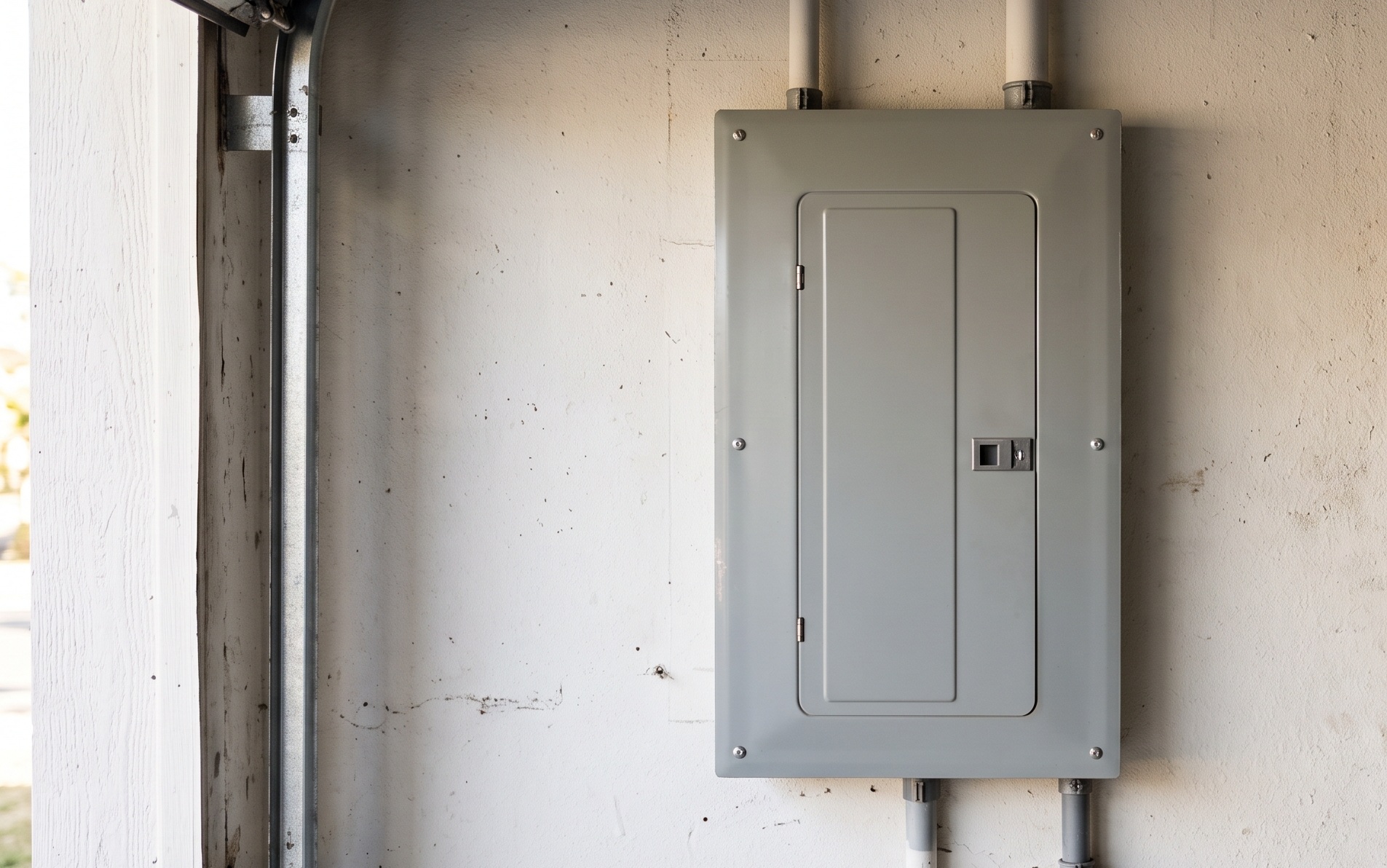
The panel’s age is on a label inside the door, sometimes with the installation date written by the electrician, and the style of the panel tells its own story: fuses rather than breakers mean a system from before the 1960s, and certain panel brands from the 1960s through the 1980s have documented failure histories that an electrician will recognize on sight. Homes built or wired more than 20 years ago often have a panel that was never designed for today’s load, and Greenville’s older neighborhoods and mill villages have their share. Wiring ages behind the walls where nobody sees it, and the first sign is usually a tripping breaker or a warm outlet rather than any warning. A safety inspection opens the panel, checks every breaker and connection for heat and corrosion, tests the grounding and the GFCI protection, and looks at the wiring wherever it can be seen. Our post on when a panel needs updating covers what it finds.
Plumbing: the pipe material
Pipes carry their age in their material. Galvanized steel, gray and threaded, dates a home’s supply lines to before the 1960s and corrodes from the inside until pressure fades and water runs rusty. Copper from the 1960s through the 1990s lasts decades but develops pinhole leaks as it ages. Polybutylene, a gray plastic used from the late 1970s into the mid 1990s, was installed across the Upstate’s growth-era subdivisions and fails at its fittings. Cast iron drain lines under older homes rust and crack after fifty years or so. A plumbing inspection checks water pressure at the main and the fixtures, looks over the visible pipe in the crawl space, and runs a camera through any drain with a history, so that a repiping or a sewer repair happens on your schedule rather than a leak’s. Our post on signs your plumbing is approaching a milestone sorts the signs by material.
Water heater: the serial number
The water heater is the easiest to date and the most often ignored. Its label carries a manufacture date, sometimes plainly and sometimes in the serial number, and a tank heater lasts about 8 to 12 years while a tankless unit lasts about 20 with yearly descaling. A tank past ten in an Upstate garage or crawl space, where humid air works on the outside while sediment works on the inside, is a replacement waiting for a date. Rumbling while heating, rusty hot water, and moisture at the base are the signs, and a flush and inspection each year is what keeps a tank on the long end of its range.
Generator: the hour meter
A standby generator’s controller displays its hours run, and the unit’s nameplate carries its manufacture date. A generator that has sat for years with only its weekly self-test is aging in ways the self-test does not show, in the battery, the fuel regulator, the oil, and the transfer switch. A generator installed by a previous owner, with no service record, is the one to have evaluated before the next storm rather than during it.
Which inspection, and when
- A heating and cooling evaluation for any system past ten years, and yearly tune-ups for every system at any age, since maintenance is what stretches the range.
- An electrical safety inspection for any home more than 20 years old that has not had one, and again after a renovation, an EV charger, or a home purchase.
- A plumbing inspection for any home more than 30 years old with its original supply lines, and a camera inspection of any drain that has been slow.
- A water heater flush and inspection every year, and a replacement plan once a tank passes ten.
- A generator service every year, and immediately for any unit with no service record.
Turning guesswork into a timeline
Carolina Heating Service has served Greenville and the Upstate since 1981 with all four trades under one roof, which means one visit can date every system in the house and tell you plainly which is nearest the end of its range. The technician documents each system’s age and condition on a report card, with the visit recorded on video. Members of the Carolina Comfort Club receive two heating and cooling tune-ups a year and priority service. Schedule online or through the 24/7 website chat, and one call will handle it all.