
Pipes do not send a message when they are about to fail, and the signs that arrive first depend on what the pipe is made of. A Greenville mill house from the 1920s, a 1970s ranch in Taylors, and a 1990s two-story in Simpsonville have three different kinds of supply line behind their walls. Each fails in its own way and on its own schedule. So rather than one list of signs, this post sorts them by material. It covers how to tell which pipe your home has, what its milestone looks like, and what to do before a small leak turns into a repipe on the plumbing’s schedule rather than yours.
Galvanized steel in the pre-1960s house
Galvanized steel is gray, threaded at the joints, and found in homes built before the early 1960s, which in Greenville means the mill villages and the older neighborhoods near downtown. It corrodes from the inside out, so the signs are about what the corrosion does to the water and the flow. Rust-colored water from more than one tap means the pipe wall is shedding into the supply. Pressure that has faded room by room, or across the whole house, is mineral scale and rust narrowing the inside of the pipe rather than a problem with the city supply; a water pressure assessment confirms whether the pipes are the bottleneck. By the time rust shows in a glass, the wall has already thinned, and galvanized lines past sixty years are a repipe candidate on age alone.
Copper from the 1960s through the 1990s
Copper is the pipe most Upstate homes from the 1960s through the 1990s carry, and it lasts for decades. Its milestone arrives as pinhole leaks, tiny corrosion holes that appear one at a time and then multiply, and while one leak is a repair, a pattern of small leaks in different places over a year or two means the pipe itself is failing rather than one bad fitting, and Greenville’s humid summers give an early pinhole extra time to hide, since damp air masks the kind of moisture that would otherwise catch your eye under a sink or on a crawl space joist. Water quality is often the cause, which is why a home on a well may want water treatment alongside the repair. Whole-home leak detection maps where else the same problem is developing before it turns into water damage.
Polybutylene in the 1978 to 1995 subdivision
Polybutylene is a gray plastic pipe, usually stamped PB2110, installed across the Southeast during the building boom from the late 1970s into the mid 1990s, and many Upstate subdivisions from that era have it. It does not give the warnings the metals do, since it fails at its fittings, often suddenly, as chlorine in municipal water makes the plastic brittle, and a burst polybutylene line is a flood rather than a drip. The sign to look for is the pipe itself: gray, flexible, marked PB, entering the water heater or visible in the crawl space. A home with polybutylene supply lines is a repipe candidate regardless of whether it has leaked yet, and knowing it is there is the whole point of looking.
Cast iron drains, the other pipe under the house
Supply lines are half the story. Homes built before the 1970s carry cast iron drain and sewer lines, which rust from the inside and crack after fifty years or so, and the signs are about drainage rather than water quality. A single slow drain is local to that fixture. Backups in several drains at once, a toilet that gurgles when the washing machine empties, or a sewage smell in the yard point to the main line, and with the rain Greenville gets in a year, tree roots have every reason to work toward any crack in it. A camera inspection shows whether the line is cracked, root-bound, or due for cleaning, and it is the difference between a sewer line repair planned for a dry week and one dug in a hurry.
How to tell which pipe you have
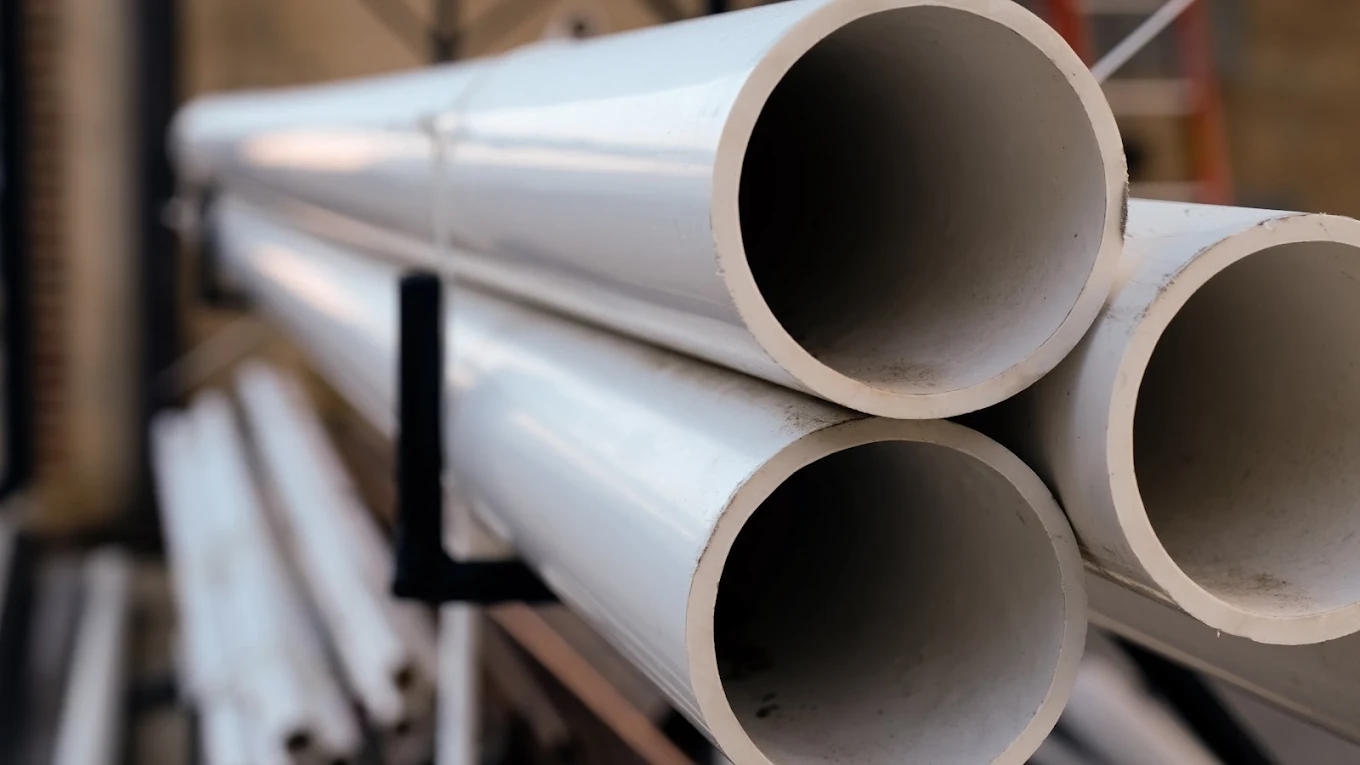
- Look where the water enters the house and at the pipes around the water heater. Gray and threaded is galvanized, reddish-brown metal is copper, gray flexible plastic marked PB is polybutylene, and white or cream rigid plastic is PVC or CPVC.
- Look at the drain under a sink and, with a flashlight, at the large pipe running through the crawl space, where black, heavy, and rough is cast iron and white plastic is PVC.
- Check the year the house was built against the ranges above. A home from the 1980s in an Upstate subdivision deserves a specific look for polybutylene.
- If none of that is possible, a plumbing inspection identifies every material in the house in one visit.
When a repipe makes sense
The decision turns on the material and the pattern. A single failed fitting on copper is a repair. Recurring pinholes, galvanized lines past sixty years, any polybutylene, and a cast iron drain that a camera shows cracked are the point where repairing one spot at a time costs more over a few years than replacing the run. A repipe of the supply lines in an average Upstate home takes a few days, the walls are opened only where needed, and the new lines carry a one-year workmanship warranty and a life measured in decades. The price is presented before any work, and financing is available.
Carolina Heating Service has served Greenville and the surrounding Upstate, including Spartanburg, Anderson, and Pickens counties, since 1981. If your home is a few decades old and the supply lines have never been touched, schedule a plumbing inspection online or through the 24/7 website chat, and the technician will identify the material, check the pressure, and say plainly which milestone your pipes are approaching. The visit is recorded on video, and members of the Carolina Comfort Club receive priority service and member pricing on any repair.