
Choosing who will install a new heating and cooling system is simpler when a household already has a relationship it trusts. That is how it went for Carol P. and her family in the Upstate. For more than two years they had called Carolina Heating Service to keep an aging system running. When the day came that another repair no longer made sense, the company they called first was the one they already knew. Here is how that decision unfolded, what she did to test it, and what her story says about the repair-versus-replace question most Greenville homeowners face eventually.
Two years of repairs
Carol’s system was old, and for more than two years Carolina Heating Service kept it running through the Upstate’s long cooling seasons and the cold snaps between them. Each repair was explained, priced before the work, and made, and each one bought another stretch of comfort. That is what a good repair relationship looks like on an aging system: the technician tells you plainly what failed and what it will cost, and the household decides whether the system has another season in it.
The point where repair stopped making sense
Eventually, repair didn’t make sense. A system near the end of its 12 to 15 years in the Upstate’s climate reaches a point where each repair buys less time than the last, and Carol’s family recognized it. The rule most technicians use is that a repair costing a third or more of a replacement on a system past twelve years is money better put toward the replacement, and her family arrived at the same conclusion from living with the system. Our post on what a system’s age means covers how to see that point coming.
Checking the options anyway
Even after two years with the company, Carol did what a careful homeowner does with a large purchase and gathered quotes from two other companies. That deserves mention, because it means the choice that followed was a comparison rather than a habit. Carolina Heating Service, which has served Greenville and the Upstate since 1981, came out promptly to measure the house and presented a fair price for a properly sized system, with the reasoning behind the recommendation. In the end, she said, it was not only about the cost. The trust built over two years of friendly, plainly explained service made the difference.
Installation day
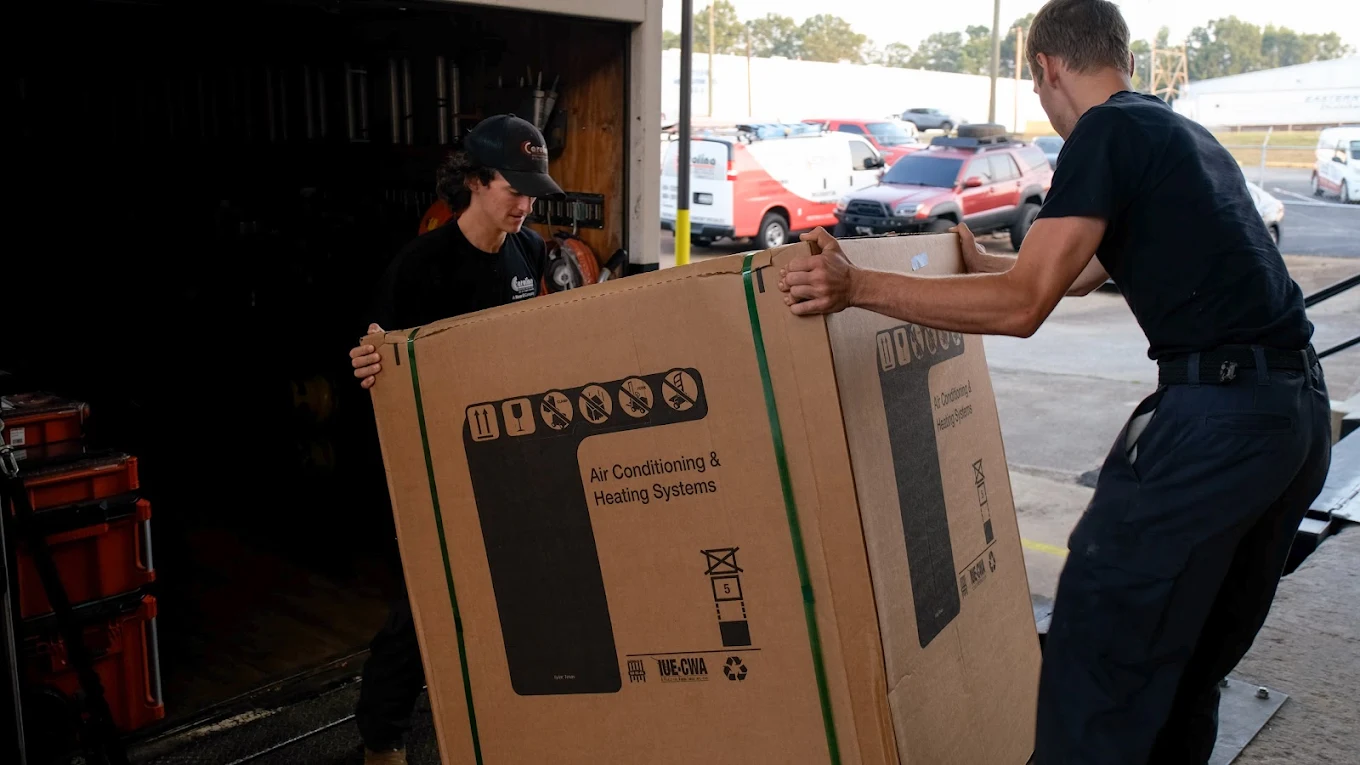
The installation crew arrived on schedule, replaced the system in a single visit, and left the work areas clean, and the new system carried Carolina Heating Service’s 10-year parts and labor warranty. For Carol’s family, the day of the installation was the end of two years of managing an old system and the start of a stretch in which the heating and cooling simply worked.
What this means if you are managing an aging system
Carol’s story is the common one in the Upstate, where heat pumps installed during the building years of the 1990s and 2000s are now reaching the end of their range, and three things in it are worth borrowing. First, a repair relationship with a company that documents each visit gives you the history to see the replacement point coming rather than meeting it in a heat wave. Second, gathering outside quotes is not disloyalty, and a company that has earned your trust should welcome the comparison. Third, the decision is easier in spring or fall, when there is time to compare, than in July, when the choice is whatever can be installed soonest. Members of the Carolina Comfort Club have that history recorded on a system report card at every visit, along with renewal credits that accumulate toward the replacement when it comes.
If your system is nearing the same point
Carolina Heating Service has served Greenville and the Upstate since 1981. If your heating and cooling system is past twelve years and the repairs are arriving closer together, schedule an evaluation online or through the 24/7 website chat, and the technician will record the readings, tell you plainly whether the system has another season in it, and present a replacement price alongside the repair price with financing available. The decision will be yours, and you are welcome to compare it.