
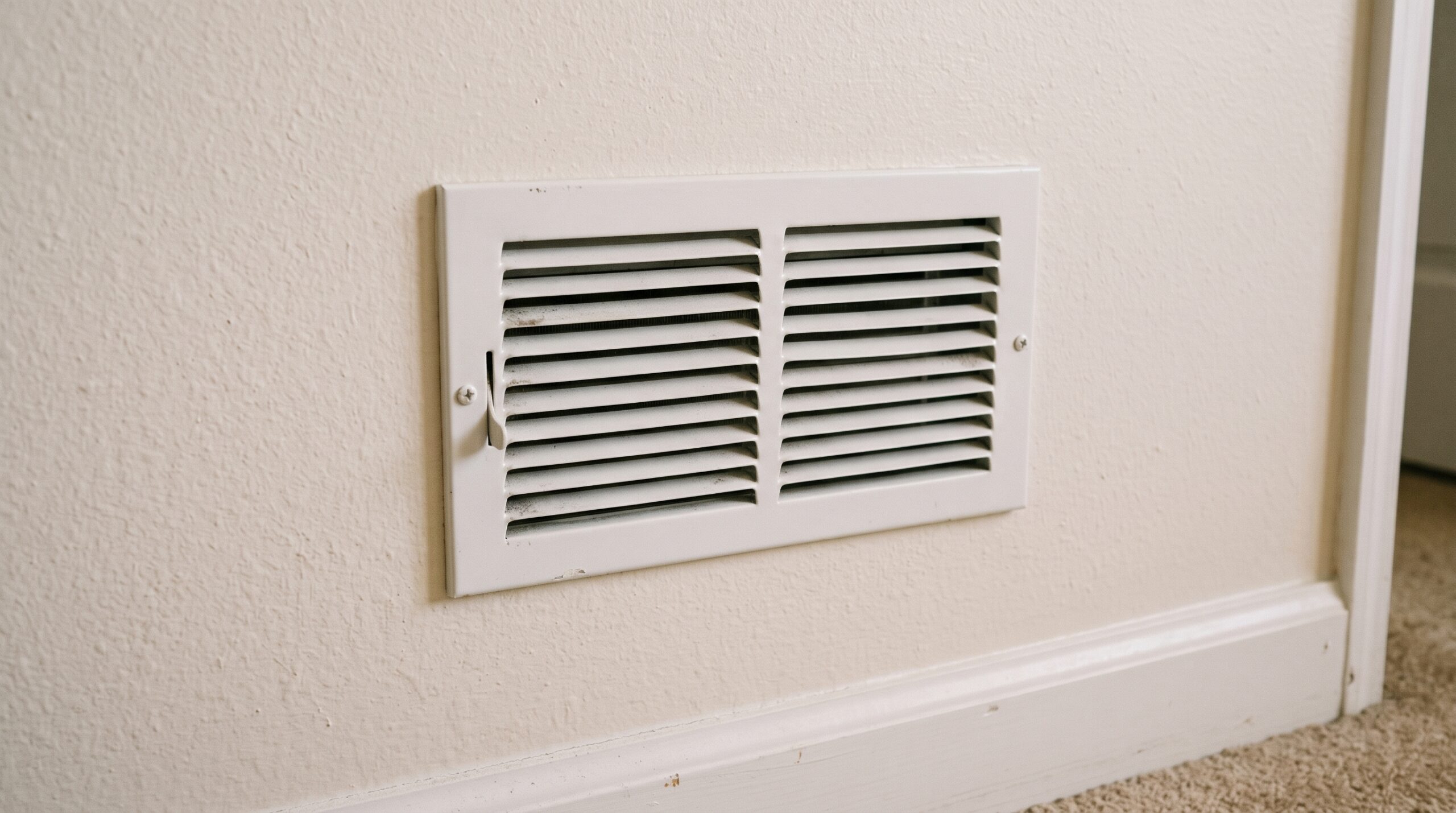
Closing the vents in rooms you are not using does not save energy, and in most homes it costs you. Your furnace or heat pump produces the same amount of heat whether a vent is open or closed, so the only thing that changes is where the air goes. Closed vents raise pressure inside the ductwork, push more heated air out through duct leaks, strain the blower, and can leave a room cold enough for the pipes in its walls to freeze. The better ways to manage rooms you rarely use are a lower overall thermostat setting, duct balancing, or zoning.
The idea behind closing vents makes sense on the surface. If a guest room sits empty, sending heat there feels wasteful. The problem is that a forced-air system is not a set of independent faucets. It is one blower, one set of ducts, and one thermostat, and closing an outlet changes how the whole system behaves.
Your System Does Not Know a Vent Is Closed
The thermostat tells the furnace or heat pump to run until the room it is in reaches the set temperature. The equipment burns the same fuel or draws the same electricity for every minute it runs, regardless of which registers are open. Closing a vent does not reduce that output. It redirects it, and the thermostat still needs the same number of minutes of runtime to satisfy its own location. The heat you kept out of the guest room went somewhere, usually out through the ductwork before it reached a room at all.
Closed Vents Raise Pressure in the Ductwork
Duct systems are sized for a certain number of open outlets. Close several, and the same volume of air has fewer places to go, so pressure inside the ducts climbs. ENERGY STAR estimates that 20 to 30 percent of the air in a typical duct system is already lost through leaks, holes, and poorly connected joints, and higher pressure forces more air out through every one of them. In an Upstate home, that air typically ends up in the attic or crawl space, which means you are heating the space above the ceiling or below the floor instead of the rooms you live in. Higher pressure also makes ducts and registers noisier, and it can pop loose the taped joints on flex duct over time.
What Extra Pressure Does to Your Equipment
The blower is built to move a specific amount of air against a specific resistance. Older single-speed blowers slow down as pressure rises, which reduces airflow across the furnace heat exchanger. With less air carrying heat away, the heat exchanger runs hotter, and the furnace shuts itself down on a high-limit safety switch. Repeated overheating shortens the life of the heat exchanger, which is the most expensive part of a furnace. Newer variable-speed blowers respond the opposite way, ramping up to force the air through, and that extra effort shows up as higher electricity use and faster motor wear.
Heat pumps add another concern. Reduced airflow across the indoor coil lowers the amount of heat the system can deliver, and the thermostat responds by calling for the electric backup strips, which cost far more to run than the heat pump itself. A closed vent in a spare bedroom can quietly raise the winter power bill through that chain of events.
Comfort Gets Worse, Not Better
Ductwork is balanced during installation so that each room receives an amount of air matched to its size and heat loss. Closing a vent throws that balance off for the whole house. The rooms nearest the equipment often get too much air and run warm, while rooms at the end of the duct runs get less and run cold. The closed-off room itself drops well below the rest of the house. If that room shares an exterior wall with a bathroom or has supply lines running through its walls, a hard freeze can take the pipes in that wall below freezing while the rest of the house stays warm. The Upstate sees several of those freezes most winters. The Christmas 2022 cold snap that held South Carolina in the low teens for two days burst pipes in plenty of rooms that were simply closed off to save heat. A burst pipe costs far more than the heat you were trying to save!
Better Ways to Manage Rooms You Rarely Use
- Lower the thermostat setting for the whole house a degree or two instead of starving one room. The U.S. Department of Energy reports that a 7 to 10 degree setback for eight hours a day saves as much as 10 percent a year.
- Ask a technician to balance the ductwork using the dampers inside the duct runs, which adjusts airflow without the pressure problems a closed register creates.
- Add a zoned HVAC system if your home has areas with different needs, since zoning closes dampers at the trunk level with pressure management built in.
- Improve insulation and air sealing in the rooms that lose the most heat, so the system has less work to do everywhere.
- Consider a ductless mini-split for an addition or bonus room that the main system never reaches well.
Getting Consistent Heat in Every Room
If certain rooms always run hot or cold, the cause is usually the ductwork, the insulation, or the system’s balance, and all three can be measured. Since 1981, Carolina Heating Service has taken care of homes across Greenville and the Upstate, and our technicians look at the whole system before recommending a change. During a furnace tune-up, your technician checks airflow, static pressure, and the heat exchanger, and documents the findings in a system report card so you can see how your system is performing. Schedule a visit online or reach us through 24/7 website chat, and we will help you get even, cozy heat throughout the house without closing a single vent.
Frequently Asked Questions
Is it okay to close vents in summer instead of winter?
No, and the risk changes rather than disappears. In cooling mode, reduced airflow across the indoor coil lets it freeze, which stops cooling altogether and can send water onto the floor when it thaws. The pressure and duct leakage problems are the same in both seasons.
Can I close just one vent in a small room?
Closing a single register in a large duct system rarely causes harm, since the pressure change is small. The trouble starts when several registers are closed at once or when a home with few registers loses one of them. Partially closing a register’s damper is gentler than shutting it completely.
What about adjusting the dampers inside the ductwork instead?
Balancing dampers in the duct runs are designed for exactly that, and a technician sets them to send a little more air to the rooms that run cold and a little less to the rooms that run hot without creating the pressure spike a closed register causes. Most homes have never been balanced. It is a one-time adjustment with lasting results.
Why is one room always colder in winter even with every vent open?
Cold rooms usually sit at the end of a long duct run, over a crawl space, on a corner with two exterior walls, or above a garage. Thin insulation, a crushed or disconnected duct, or an undersized supply are the common causes. A duct inspection and a look at the insulation find which one you have.
Does closing vents help an oversized furnace cycle less?
No. Closing vents makes an oversized furnace behave as if it were even larger, with shorter cycles and more overheating shutdowns. The fixes for an oversized system are a two-stage or variable-speed replacement when the time comes, or zoning so the output is directed where it is needed.