
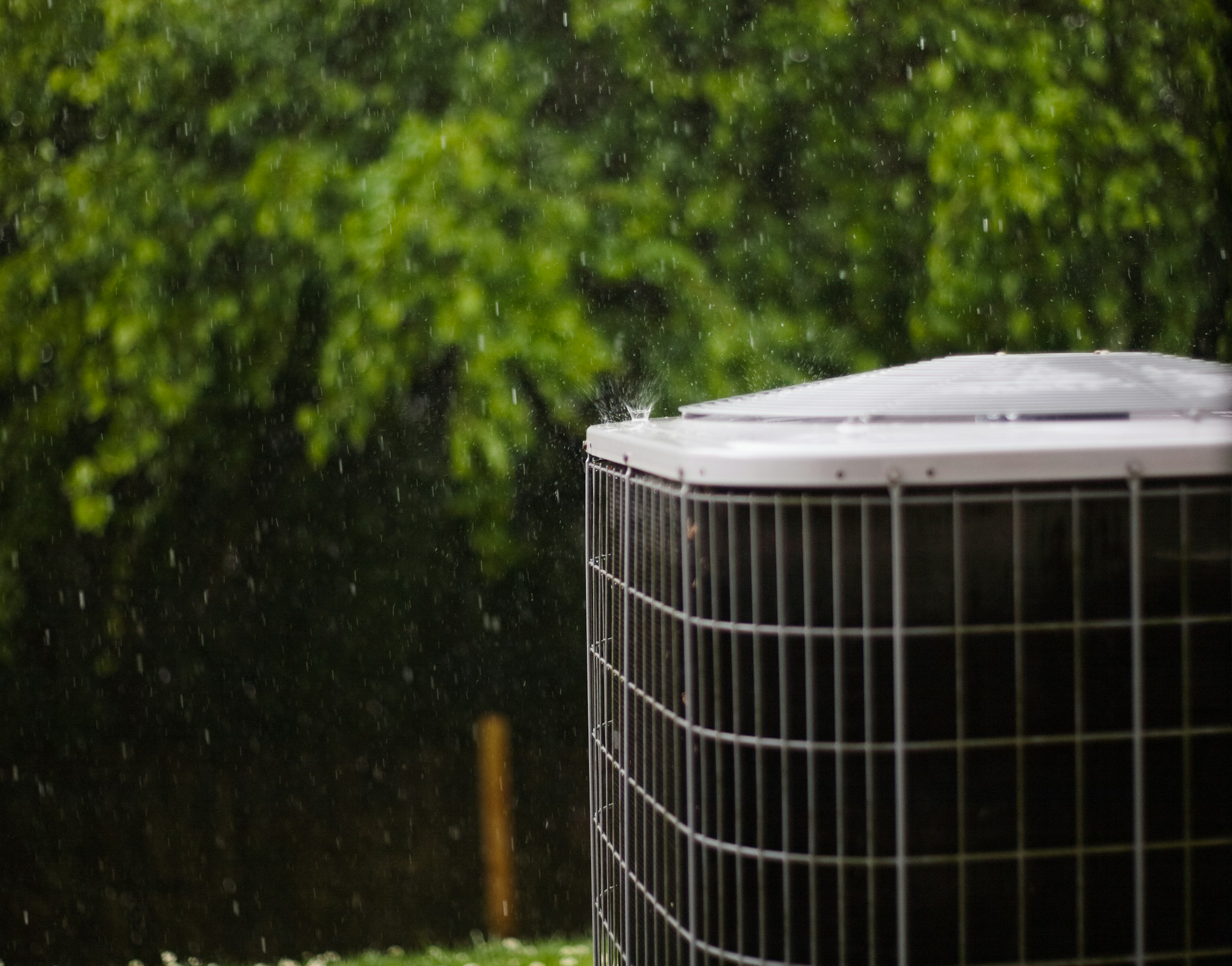
Greenville sits in one of the more lightning-prone regions of the country, and a surge does not need a strike on the house. A strike on a line blocks away sends a spike into every home on the circuit. Restoration after an outage arrives in flickers and spikes, and every large motor in the house releases a small one when it shuts off. An Upstate home takes hundreds of surges a year, most too small to notice and all wearing on the electronics inside the air conditioner, the refrigerator, and everything with a screen. This post lays out the protection plan with steps in priority order.
Why the heating and cooling system comes first
The most expensive thing a surge can reach is the heating and cooling system. The control board burns outright in a large spike or degrades a little with each small one, so a board built to last fifteen years fails at eight. The capacitor and contactor in the outdoor unit are worn by every spike and by the restarts of a messy restoration, and a failed capacitor leaves the unit humming with the fan still. The compressor is strained every time a flickering restoration asks it to restart against pressure it has not released. A surge seldom kills a compressor outright; it wears down the parts that shield it, and the compressor gives out a season or two afterward.
If you do one thing: a whole-home surge protector at the panel
The single most effective step is a surge protective device mounted at the electrical panel, where it intercepts a surge before it reaches any circuit in the house. It protects everything that cannot be plugged into a strip: the heat pump, the air handler, the water heater, the well pump, the sump pump, the range, and the wiring itself. Carolina Heating Service’s electricians install one in about an hour, and it costs a small fraction of the compressor it protects. In a region where restoration surges follow every major outage, it is inexpensive insurance a house can carry, and if the house does not have one, it is the first call to make before storm season.
If you do two things: rated surge strips at the electronics
The second layer catches what the panel device lets through and handles the small surges generated inside the house. Televisions, computers, gaming systems, and the router belong on a surge strip with a joule rating printed on the label rather than a plain power strip, and the difference is the rating. A strip that has absorbed a large surge has usually spent itself doing so, and its indicator light says so; a strip that has taken a hit protects nothing afterward and should be replaced. The smart thermostat, the doorbell camera, and the garage door opener are the touchiest devices in the house, and when several die together, a surge has come through.
If you do three things: protection at the outdoor unit and a check of the grounding
The third layer is specific to the equipment at the top of the list: a dedicated surge protector at the outdoor unit’s disconnect, a small addition during a tune-up or an electrical visit. At the same time, an electrician confirms the home’s grounding is sound, because every protector works by sending excess voltage to ground and can only do that on a home whose grounding has not corroded. Older Greenville homes, from the mill villages to the 1970s ranches, sometimes have grounding that was adequate when installed and is not now.
The habit that costs nothing
One layer is free. During a storm, pull the plugs you can reach, because no protector matches a cord out of the wall. After an outage, give the heating and cooling system a few minutes before judging it, and set the thermostat and leave it during storm season so the system is not called to a large jump the moment power returns. In the week after a storm, take stock of anything that is not behaving as it did, because the electronics that die are the visible sign that the control boards you cannot see may be damaged too.
The maintenance that catches what the layers miss
No layer is perfect, and the heating and cooling tune-up is what catches the surge damage that gets through. It tests the capacitor and contactor under load, which shows the wear that shortens their lives before it takes the compressor, and it checks the control board and the connections a spike may have scorched. A tune-up in the weeks after a major storm is worth scheduling on its own. Members of the Carolina Comfort Club receive two maintenance visits a year, and the readings from each go on a system report card.
Putting the priorities to work
- First, have a whole-home surge protector installed at the panel, or confirm the indicator on the one you have.
- Second, put every electronic device that matters on a rated surge strip and replace the strips that have taken a hit.
- Third, add a protector at the outdoor unit and have the grounding checked, especially in an older home.
- Always, unplug during storms, give the system a few minutes after an outage, and schedule a tune-up after any major storm.
One visit for all three layers
Carolina Heating Service has served Greenville and the Upstate since 1981, and because our electricians and our heating and cooling technicians work under one roof, the panel protector, the grounding, and the equipment can be addressed in one visit rather than three. Schedule online or through the 24/7 website chat, and you will receive a photo of your technician and an on-the-way message before arrival. The technician will explain what the house has, what it lacks, and what each layer costs, with the price presented before the work and the visit recorded on video.