
The Upstate’s winter is colder than the rest of South Carolina’s. Greenville homes face a few weeks of hard cold each year in houses not built for it. Staying warm through those weeks is a matter of steps taken in advance, and the steps differ in how long they hold, from tonight to a winter to years. This post sorts five of them that way, from the shortest to the longest, so you know what to do this evening and what to plan for.
Tonight, the steps you repeat
The first step is the set of things a household does on a cold night and does again on the next one. Hold the thermostat steady rather than turning it down at bedtime and up at breakfast, since a heat pump asked for a large jump calls its expensive auxiliary strips to make it. Open the cabinet doors under sinks on exterior walls so room heat reaches the pipes, and let a faucet fed by an exposed line drip on the coldest nights. Close the fireplace damper when the fire is out and keep the vents open in every room; these cost nothing and hold only until morning, and our post on preventing frozen pipes covers the pipe side in detail.
This winter, the heating system’s tune-up
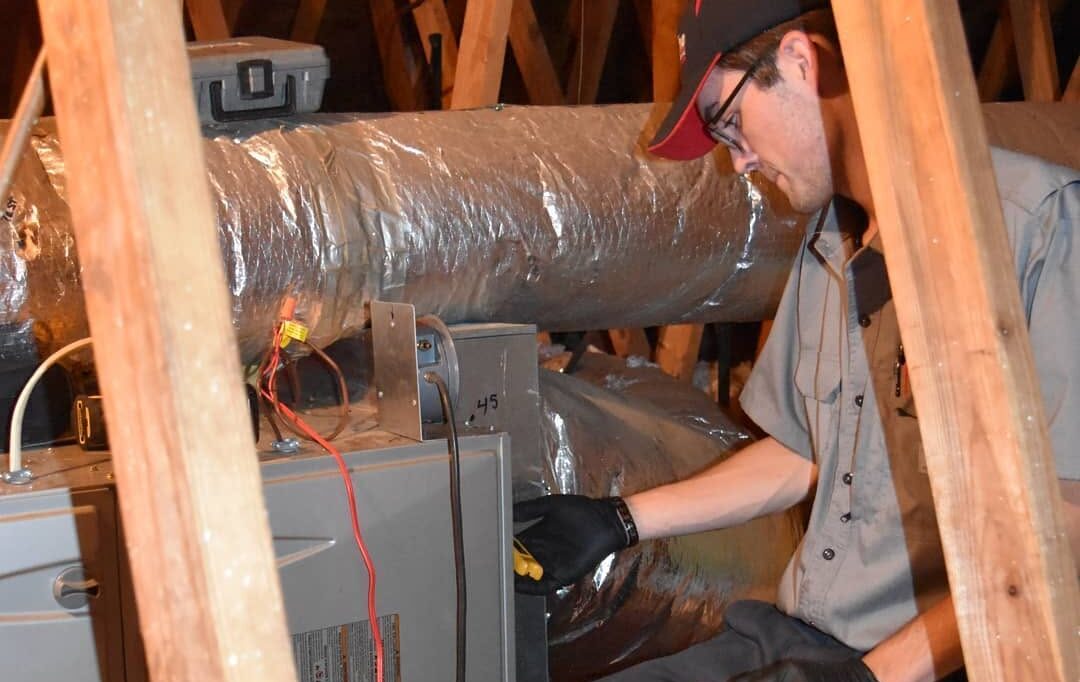
The second step holds for a season. A heat pump that has had its fall tune-up has clean coils, a correct refrigerant charge, auxiliary heat strips that have been tested under load, and a defrost cycle that runs when it should, and it will hold the house on a night in the 20s without straining or without quietly running the strips at every call for heat. A gas furnace with clean burners and an intact heat exchanger does its work safely and completely. In the Upstate, where the strips run more hours than they do farther south, this step has the largest effect on the January bill, and if the fall visit did not happen, a heat pump or furnace check in December is the single most useful appointment on this list. It has to be repeated each fall, which the Carolina Comfort Club puts on the calendar.
The next several winters, sealed leaks and insulated pipes
The third step holds for years. On a cold, windy evening, walk the house with the back of your hand at the window frames, door sweeps, attic hatch, recessed lights, and the places where pipes and wires pass through exterior walls, and mark every spot where you feel air moving. Weatherstripping, door sweeps, foam gaskets behind the outlet covers on exterior walls, and caulk around the penetrations close those leaks for a decade or more, and they take a weekend. Foam sleeves on the exposed pipe, insulated covers on the spigots, and closed foundation vents protect the plumbing as long as they stay in place. This is the step Greenville homes tend to skip, because the house was never drafty enough at 50 degrees for anyone to notice.
The life of the house, the attic and the ducts
The fourth step holds as long as the house stands. Heat rises, and a home with thin or settled attic insulation loses it through the roof every night of every winter; many Upstate homes built before the 1990s have less than current recommendations call for, and what is there has settled. Under the floor, ductwork running through a crawl space on damp clay leaks heated air through joints that opened years ago, and that is heat you paid for and never felt. Sealing the ducts and adding attic insulation lowers the heating bill, the cooling bill, and the strain on the equipment at once, and a technician who measures the ducts and looks at the attic can say plainly whether either is worth doing.
Every winter from now on, a plan for the power going out
The fifth step is the one that does not depend on the house at all. The coldest nights of an Upstate winter often arrive with the ice storms that take down power lines, as they did in December 2005 and February 2014, and no heat pump or furnace runs without electricity. A house that began the evening at 68 drifts toward the outdoor temperature before dawn. For a home that loses power for days more than occasionally, a standby generator that starts on its own and carries the heating system through the outage is the difference between an inconvenience and a night somewhere else, and Carolina Heating Service installs and services them along with the electrical work. For every home, the plan should at least cover where the flashlights and blankets are, which room holds heat best, and a portable generator’s place well away from every window and door.
Which step first
The order above runs from shortest horizon to longest, and it is also a reasonable order to work in, since the tonight steps cost nothing and start now. The tune-up is one appointment and pays back this winter, the sealing and insulating take a weekend and pay back for years, and the attic and the ducts are a project a technician can size up in one visit. The generator is an investment, and the ice storm that makes the case for it does not send a warning.
Carolina Heating Service has served Greenville and the Upstate since 1981 with heating, electrical, plumbing, and generators under one roof, which means steps two through five can be looked at by one company. Schedule a fall or winter visit online or through the 24/7 website chat, and the technician will record the system’s readings, look at the ducts and the attic if you ask, and say plainly which steps would do the most for your house, with the price presented before any work and the visit on video, so that one call covers the whole list.