
A heating and cooling system rarely fails without warning. For weeks or months before a breakdown it sends signals, and those signals are the system telling you it is overdue for a tune-up. The difficulty is that each sign has several possible causes, and guessing among them is how a small problem becomes a compressor. So this post pairs each of the five most common signs with the reading a Carolina Heating Service technician takes to confirm the cause.
1. The power bill is climbing without an obvious reason
If the bill is higher than the same month last year and the household’s habits have not changed, the system is working harder than it should to produce the same comfort. Dirty coils, a clogged filter, and a low refrigerant charge are the usual causes, and in Greenville the outdoor coil also carries a spring’s worth of pollen. Rising bills are the earliest and most common sign on this list, and the easiest to blame on the weather.
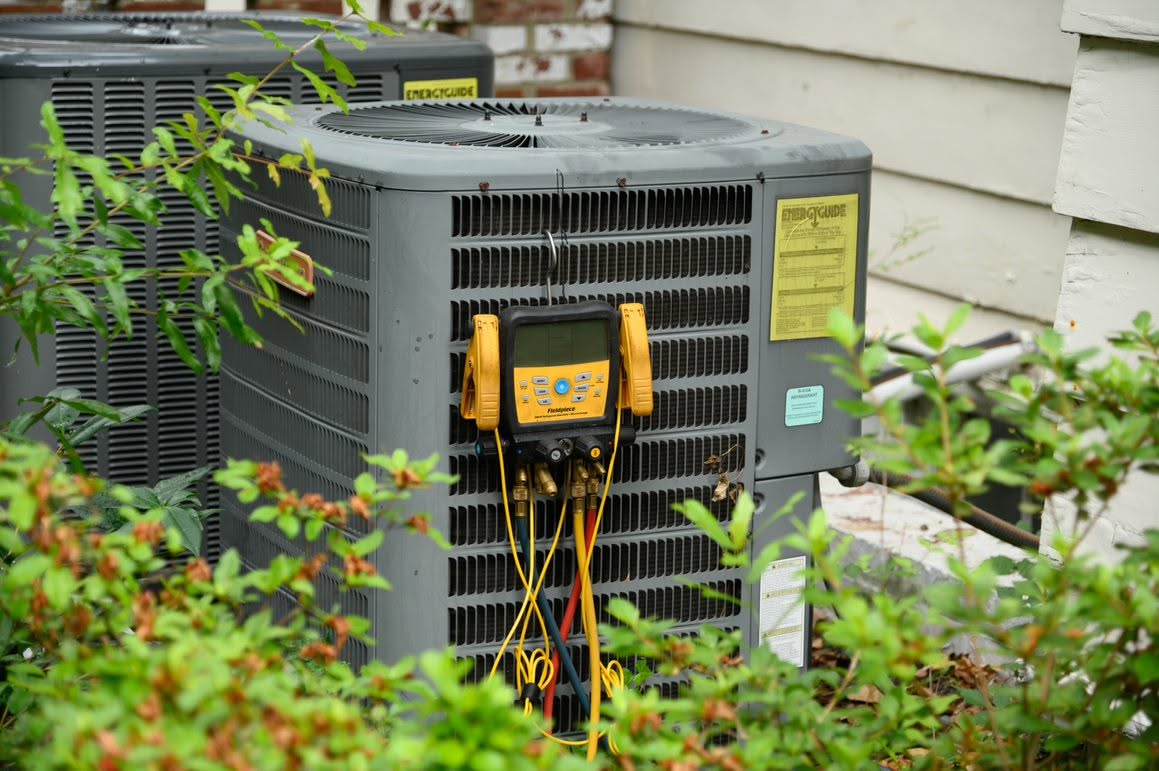
The reading that confirms it is the pair of refrigerant pressures and temperatures on the lines, which show whether the charge is correct, and the temperature difference between the return air and the supply air, which shows whether the coils are moving heat the way they should. An air conditioner with a dirty coil or a low charge shows a smaller difference than the manufacturer specifies, and the number goes on the report card.
2. Airflow is weak or uneven from room to room
Some rooms feel comfortable while others run warm, or the upstairs of a two-story Upstate home bakes in July while the downstairs is fine. This points to restricted airflow, a blower that has slowed, or ductwork that has separated in the attic or crawl space.
The readings that confirm it are static pressure across the ductwork and airflow at the registers. High static pressure with low airflow means a restriction, a dirty coil or a collapsed duct; normal pressure with low airflow at one register means a joint has opened between the air handler and that room. Neither can be judged from the hallway.
3. The system makes new or unusual noises
Rattling, squealing, or grinding is not normal operating sound. Squealing usually means a motor bearing wearing out, grinding means metal on metal inside a motor or fan, and rattling means a loose panel or a blower wheel out of balance, and a part that fails while running can damage what is around it.
The reading that confirms it is the current each motor draws, measured against its rating. A motor with a failing bearing draws more current than it should, and a capacitor that has weakened shows a charge below its rating, which is why the outdoor unit hums before the fan catches. Both show a part on its way out.
4. The system cycles on and off more often than it used to
Short, frequent cycles put extra wear on the compressor and usually mean the system is struggling to reach the temperature on the thermostat, or reaching it too fast because a dirty coil or a low charge has thrown off its capacity. In Upstate humidity, short cycling also means the system never runs long enough to dry the air, which is why a house can sit at 74 degrees and feel sticky.
The readings that confirm it are runtime and cycle count, which a smart thermostat records and a technician can pull, along with the coil temperature and the charge. A system that should run twenty-minute cycles and is running six-minute ones has a cause, and the readings say which one.
5. It has been more than a year since the last tune-up
Even when nothing feels wrong, a system that has gone a year or more without service is due, since wear accumulates gradually and a routine visit catches it before it becomes one of the four signs above. This sign is also the one most manufacturers care about, since a parts warranty usually requires proof of professional maintenance, and the report cards from each visit are that proof.
The reading that confirms it is the whole card, because a tune-up records the charge, the temperature split, the static pressure, the motor current, the capacitor’s charge, and the condition of the connections, drain, and safety controls, each against its specification, which is how a technician tells a system that is fine from one about to produce a symptom.
Why these signs matter more in the Upstate
Greenville’s climate gives a cooling system a long season, from April into October, with only a short break before heating begins, and a system carrying that workload without maintenance has more hours to develop the problems above and less downtime to recover. Spring pollen on the outdoor coil and humidity feeding growth on the indoor one add two local causes to a national list, and both are cleaned off during a tune-up.
What a maintenance visit includes
On a maintenance visit with Carolina Heating Service, the technician takes every reading above, cleans the coils and the condensate drain, tests the capacitor and motors under load, and tightens the connections. You receive a system report card and a video of the job, and any recommendation comes with the reading behind it and the price before the work. Members of the Carolina Comfort Club receive two tune-ups a year, member pricing on repairs with a one-year labor warranty, and priority service when the first heat wave fills the schedule.
Carolina Heating Service has served Greenville and the Upstate since 1981. If your system is showing any of the five signs, schedule online or through the 24/7 website chat, and you will receive a photo of your technician and an on-the-way message before arrival. The readings will say what the system needs, and the decision stays with you.