
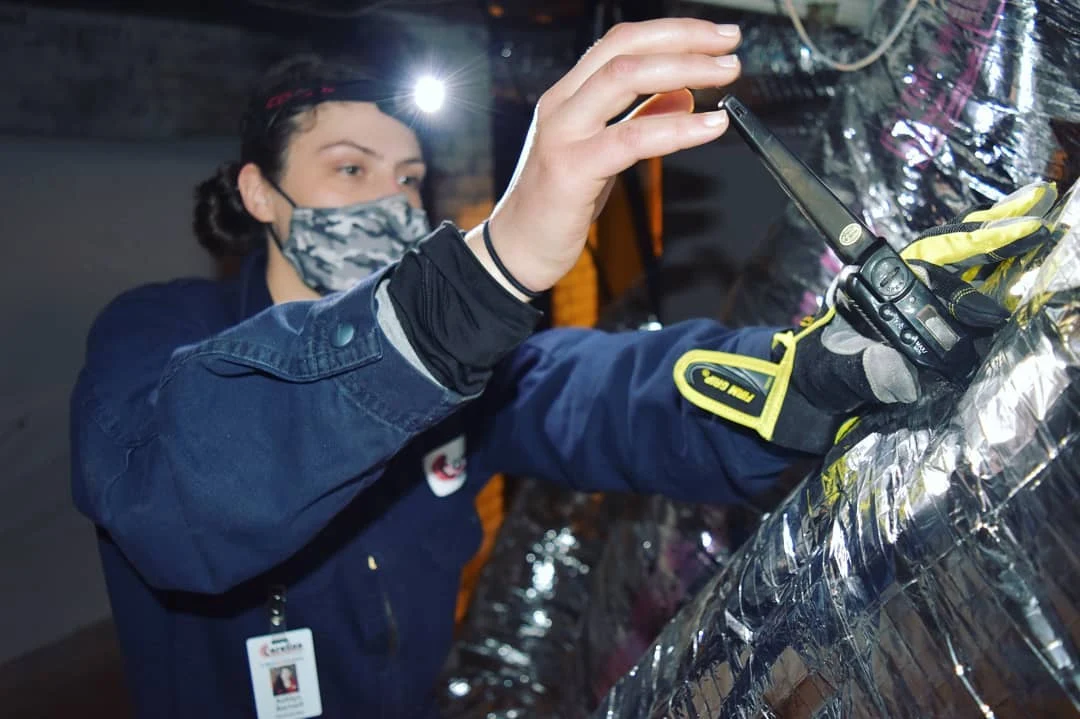
Ductwork is the part of a heating and cooling system nobody sees, and when a technician says it may need replacing, the news lands as a surprise that should not be rushed. A duct recommendation is three decisions in order, and taking them one at a time turns a surprise into a plan. The first is whether the ducts need sealing, cleaning, or replacing. The second is whether the answer applies to part of the system or all of it. The third is whether to do the work now or alongside the next heating and cooling system. Here is how each is made in an Upstate home, and what a technician should show you.
Why ducts fail in the Upstate
Ducts run through the two least hospitable places in a Greenville home. In the attic, flexible duct passes every summer in 130-degree air, which bakes the liner brittle and leaves the insulation jacket sagging. In the crawl space, ducts sit in air kept damp by Piedmont clay, where metal rusts at the seams, flexible duct grows mold inside, and the hangers corrode and let runs sag into the mud. Over decades the joints separate and the mastic fails, and by the time a house is twenty years old its ducts have usually opened in a dozen places. The signs upstairs are a room that never holds its temperature, a system that runs constantly, dust that returns days after cleaning, and a musty smell from the vents.
First, seal, clean, or replace
The first decision is made by two measurements, and a technician who recommends replacement should be able to show you both. Static pressure across the ductwork and airflow at the registers show how much conditioned air is lost and whether each room gets its share. A camera inside the runs shows the condition of the material. Sealing is the answer when the ducts are sound but the joints and seams leak; mastic and proper connections recover the lost air in a modest job. Cleaning is the answer when the ducts are sound but dirty, which in Upstate humidity often means growth after a damp season; our air duct page covers it. Replacement is the answer when the material itself has failed: liner that crumbles when touched, metal rusted through, insulation fallen away along whole runs, mold inside flexible duct that cleaning cannot reach, or a layout so undersized that the far rooms have never had enough air.
Second, part of the system or all of it
Replacement is not always the whole system. Many Upstate homes have ducts that failed unevenly, with the attic runs baked brittle while the trunk line is fine, or with one long run to an addition that was never sized correctly. A partial replacement redesigns and replaces the failed runs, seals the rest, and rebalances the registers, at well below the cost of a full one. A full replacement is the answer when the material has failed throughout, when the original layout was wrong for the house, or when a new system is going in and the ducts will not deliver what it was rated for. The camera and the airflow readings make this decision too, run by run.
Third, now or with the next system
The third decision is timing. When the heating and cooling equipment is near the end of its 12 to 15 years, the sensible time for duct work is alongside the replacement, since a new high-efficiency system on failed ducts wastes part of what it cost and the technician who quotes the equipment can quote the ducts on the same visit. When the ducts have failed but the equipment has years left, the duct work stands on its own, paid back in comfort and in the bill. Spring and fall are the practical seasons, when the attic is not 130 degrees, and a mold finding moves the timing up regardless, since that is an air quality problem in every room the system serves.
What the work involves
A duct replacement begins with a design rather than a demolition. The technician measures the rooms, calculates the airflow each needs, and lays out a system sized for the equipment, which may differ from what is there now. The failed duct is removed from the attic or crawl space, the new runs are installed with sealed connections and hung clear of the clay where they pass under the house, and the registers are balanced so each room receives its share. In most homes the job takes one to three days, the living space is disturbed very little, and the technician measures the finished system’s airflow before leaving. The job is recorded on video, carries a one-year workmanship warranty, and is priced with a firm number presented before the work, with financing available.
What changes afterward
A replacement is one of the few heating and cooling jobs that improves comfort, efficiency, and air quality at the same time. Properly sized ducts deliver the designed airflow to every room, so the upstairs of a two-story home finally holds the same temperature as the downstairs. Sealed ducts no longer feed conditioned air into the attic or draw damp crawl space air into the rooms, and the bill and the indoor humidity come down together. New material with intact insulation stops circulating the dust and growth that old duct has been carrying, which for an Upstate household with allergies is often the change they notice most.
Making the three decisions with the readings in hand
Carolina Heating Service has served Greenville and the Upstate since 1981. If a technician has mentioned your ductwork, or the signs above describe your house, schedule an evaluation online or through the 24/7 website chat. The technician will take the airflow readings, run the camera, and walk you through all three decisions with the evidence for each, leaving the decision at each step to you, and members of the Carolina Comfort Club receive priority service and member pricing on any repair.