
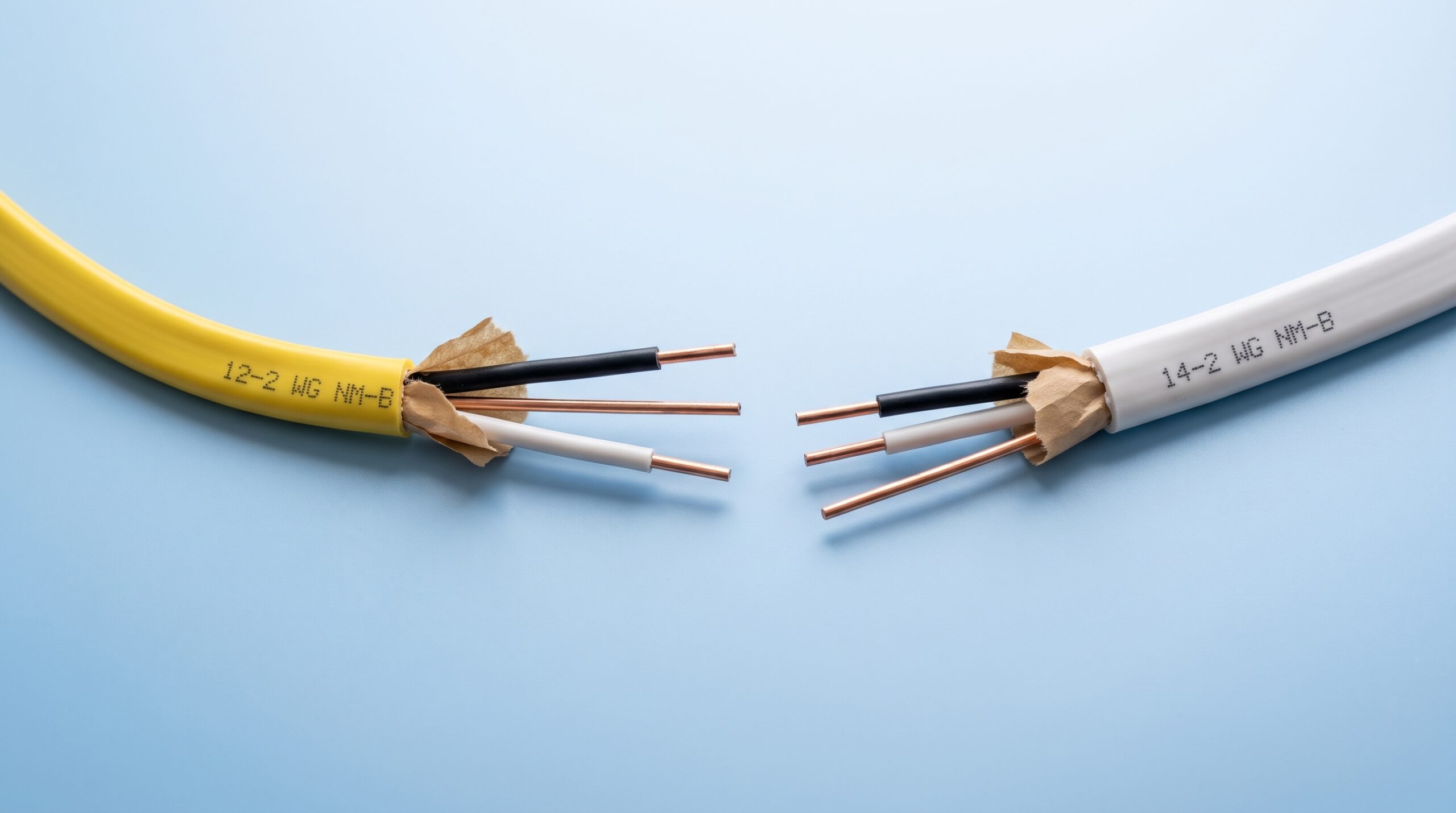
Outdated or unsafe wiring shows itself in a handful of ways. The first group is built in: aluminum branch wiring in a home from the late 1960s or early 1970s, two-prong ungrounded outlets, and a 60- or 100-amp panel that is out of breaker spaces. The second group is behavior: lights that flicker or dim when an appliance starts, outlet covers or switch plates that feel warm, a burning smell with no source, breakers that trip often, scorch marks, and buzzing from the panel. Any one of them deserves an electrician’s look. Several together mean the home’s electrical system has fallen behind the way the home is used.
Greenville and the surrounding Upstate have a large stock of homes from every era: early 1900s houses in the former textile mill villages of Greenville, Greer, and Easley, postwar ranches from the 1950s and 1960s, and subdivisions that filled in through the 1970s and 1980s. Each era came with its own wiring, and each has a known weakness.
Aluminum Branch Wiring
From about 1965 to 1973, when copper prices spiked, many homes were wired with aluminum for the branch circuits that feed outlets and lights. Aluminum expands and contracts with heat more than copper, and over decades the connections at outlets, switches, and fixtures loosen, oxidize, and overheat. The U.S. Consumer Product Safety Commission has reported that homes with aluminum branch wiring from that era are far more likely to have connections reach fire-hazard conditions than homes wired with copper. If your home dates to those years and has not been rewired or repaired with approved connectors, an electrician can confirm what is behind the walls and recommend the fix. The options range from pigtailing copper at every connection to a full rewire.
Knob-and-Tube and Cloth-Insulated Wiring
Homes built before the 1940s may still carry knob-and-tube wiring in attics and walls, with no ground and insulation that crumbles when touched. Homes from the 1940s and 1950s often have cloth-covered wiring whose insulation has become brittle. Both were adequate for the lamps and radios of their day and are not adequate for air conditioning, a modern kitchen, and a house full of chargers. Insulation blown into an attic over knob-and-tube traps heat around wires designed to run in open air, which is why many insurers ask about it.
Two-Prong, Ungrounded Outlets
A two-slot outlet has no ground path. The ground wire gives a fault somewhere to go other than through a person or an appliance, and it is what surge protectors and many electronics rely on. Adapters that let a three-prong plug fit a two-slot outlet do not create a ground. Upgrading outlets and switches to grounded ones requires a ground wire to the outlet, which sometimes means new cable, and in the meantime a GFCI can add shock protection on an ungrounded circuit.
Flickering, Dimming, and Warm Plates
Lights that dim when the air conditioner, dryer, or microwave starts mean the circuit or the service is near its limit, or a connection is loose. A warm outlet cover or switch plate means heat is building at a connection behind it. A burning or fishy smell with no source often comes from overheating plastic inside a box. Buzzing or crackling from an outlet, a switch, or the panel is the sound of arcing. None of these are cosmetic, and all of them are reasons to stop using the affected circuit until it is checked.
Breakers That Trip and Panels That Are Full
A breaker that trips repeatedly is protecting a circuit that is overloaded or faulted. A panel with every space filled, tandem breakers squeezed in, or two wires under one breaker terminal is a panel that has run out of room for the way the home is used. Many Upstate homes from the 1960s and 1970s still have 60- or 100-amp services, and some have panels from manufacturers with documented histories of breakers that fail to trip. An electrician can tell you whether the panel is simply full or whether it needs to be replaced, and circuit breaker and panel service covers both.
Rising Demand From Modern Life
A home draws more power today than it did when it was wired. Central air conditioning, an electric range, a heat pump water heater, a second refrigerator, a workshop, an EV charger, and a standby generator transfer switch each add load. A wiring system from 1972 was not designed with any of them in mind. The signs above are how the system tells you it is being asked to do more than it was built for.
Rodent Damage in Crawl Spaces and Attics
Upstate homes with vented crawl spaces and open attics get visitors. Squirrels, mice, and rats chew the insulation off wiring, and a chewed cable in a crawl space can arc against a damp joist for a long time before anything trips. Flickering on one circuit after a cold snap, when rodents move indoors, is a common first clue. A look at the wiring in those spaces is part of any thorough inspection.
The Right Time to Rewire
If you are planning a renovation, that project is the most practical time to update wiring, since the walls are already open. Otherwise, the priority order is safety first: aluminum connections, arcing, and overheating get addressed now, while grounding and capacity upgrades can be scheduled. Carolina Heating Service has kept Upstate homes comfortable since 1981, and our electricians evaluate your home’s wiring and tell you plainly what needs attention now and what can wait. You get video of what they find, a flat-rate price before any work begins, and a one-year workmanship warranty with free callbacks within 30 days. Schedule an electrical evaluation online or message us any time through the 24/7 chat on our website, and we will help you understand what your home’s electrical system can safely handle.
Frequently Asked Questions
What type of wiring do homes from the 1940s and 1950s usually have?
Many have cloth-covered or early thermoplastic wiring, and homes from before the 1940s may still have knob-and-tube in places. The insulation on those older wires becomes brittle and crumbles when disturbed, and knob-and-tube has no ground. An electrician can confirm what is behind the walls from the panel and a few junction boxes.
Can aluminum wiring be made safe without rewiring the house?
Yes, in many cases. The U.S. Consumer Product Safety Commission recognizes a repair method that pigtails copper to each aluminum connection with a specialized connector, which addresses the loose-connection problem at outlets, switches, and fixtures. A full rewire is the other option, and the right choice depends on the condition of the wiring and your plans for the home.
Does homeowners insurance care about old wiring?
Many insurers ask about the age of the wiring and the panel brand when writing a policy, and some decline or surcharge homes with knob-and-tube, aluminum branch wiring, or certain panel brands until they are corrected. An electrician’s inspection letter often satisfies the insurer. Your agent can tell you what your carrier requires.
What does a whole-house rewire involve?
A rewire usually runs new cable through the attic and crawl space, with small openings cut in walls where needed, and the electrician patches the openings or leaves them for a drywall contractor. Most rooms are back in use the same day. A rewire done during a renovation, when walls are already open, is the least disruptive version.
Is a 100-amp service enough for a modern home?
A 100-amp service runs many homes comfortably, but a load calculation decides it. Central air conditioning, an electric range and dryer, an EV charger, and a heat pump water heater together can exceed it. A 200-amp upgrade usually accompanies a rewire or a panel replacement when those loads are planned.