
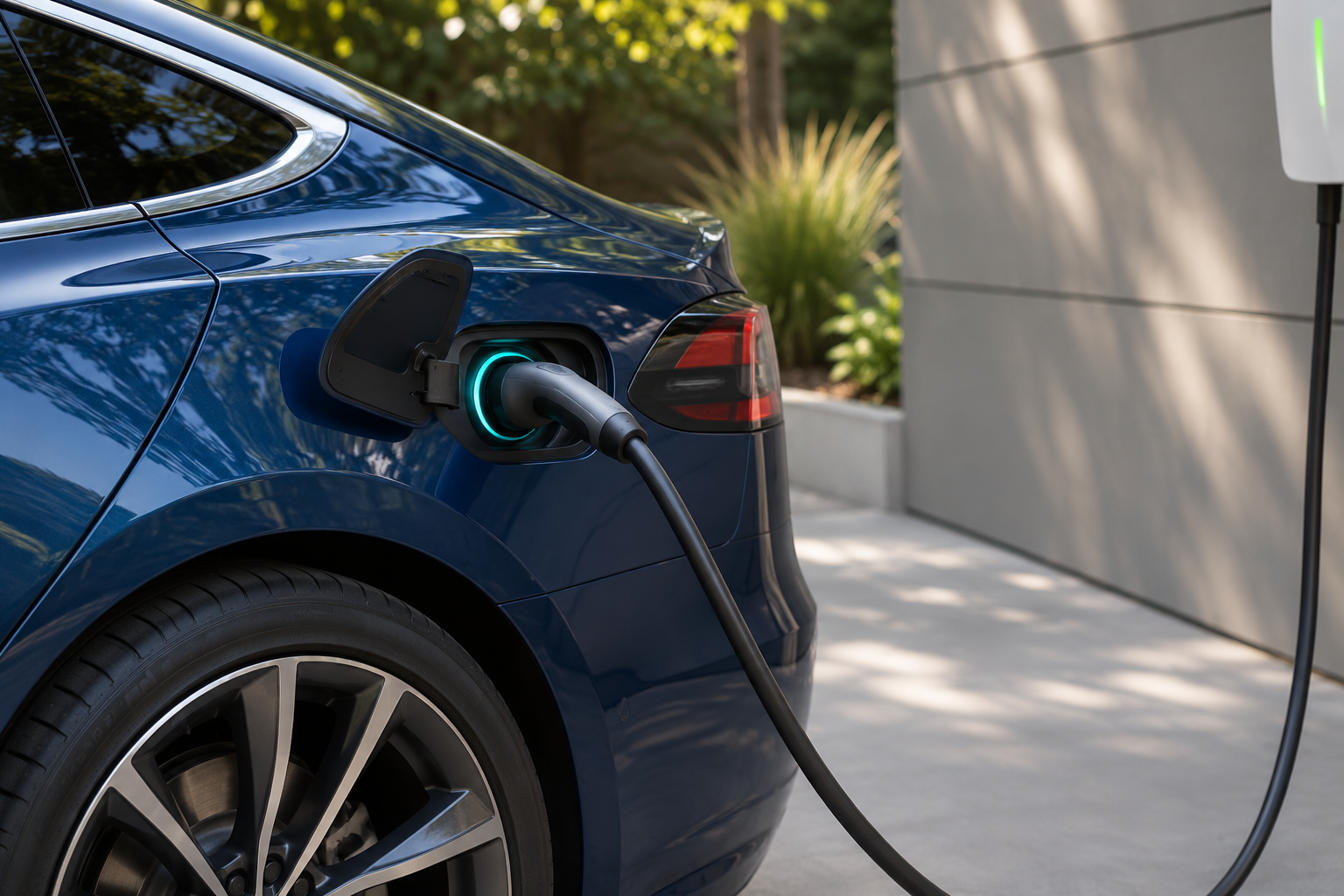
Installing a home EV charger means adding a dedicated 240-volt circuit, confirming your electrical panel has the capacity to carry it, and choosing a charger and a location that fit how you park. It also means getting the permit and inspection that Greenville County and the surrounding Upstate jurisdictions require for the work. Most installations finish in an afternoon when the panel has room and the charger sits near it. The ones that take longer involve a long wire run or a panel that needs upgrading first.
Electric vehicles are a growing share of the cars on Upstate roads, with BMW’s plant in Greer building electrified models a few miles from Greenville, and most owners do the large majority of their charging at home. The convenience depends on getting the circuit right the first time.
Level 1 vs. Level 2 Charging
Every EV comes with a Level 1 cord that plugs into a standard 120-volt outlet. It works, and it adds a few miles of range per hour, which can keep up with a short commute but falls behind a long one or a two-EV household. A Level 2 charger runs on a 240-volt circuit, the same kind that serves an electric dryer or range, and adds range several times faster, which is why most owners who charge at home install one. Level 2 is also what lets you take advantage of overnight charging windows, since a full charge finishes while you sleep.
What Your Panel Needs to Support
A Level 2 charger typically runs on a 40-, 50-, or 60-amp dedicated circuit, and whether your panel can take it depends on the service size and what is already connected. Many Upstate homes built before the 1990s have 100-amp services, and a 100-amp panel already feeding central air conditioning, an electric range, and an electric dryer may not have room for a charging circuit. Your electrician runs a load calculation under the National Electrical Code to find out. When the service is short, the options are a load management device that pauses charging while other large loads run, a smaller charging circuit, or a panel and service upgrade to 200 amps. The upgrade also makes room for future additions like a heat pump water heater or a generator transfer switch.
Hardwired or Plug-In
A plug-in charger connects to a 240-volt outlet, usually a NEMA 14-50, and can be unplugged and taken along when you move. A hardwired charger connects directly to the circuit, allows higher charging rates, avoids a plug connection that can loosen and overheat, and is required for most outdoor installations. Current code requires GFCI protection for the receptacle in a plug-in setup, which is one more reason to let the electrician choose the components as a matched set.
Where the Charger Should Go
Location affects both the installation and daily use. A charger mounted near the panel needs a short wire run and costs less to install. A charger on the far side of the garage or on a driveway post needs conduit, a longer run, and sometimes trenching. Think about where the car’s charge port sits, which side you park on, whether a second EV might share the charger, and whether the cord reaches without crossing a walkway. An outdoor charger needs a weather-rated unit and an in-use cover, and in the Upstate’s wet winters that rating matters.
Permits, Code, and Inspection
A new 240-volt circuit requires an electrical permit and an inspection in Greenville County, the City of Greenville, and the surrounding Upstate jurisdictions. The inspector confirms the wire gauge, the breaker size, the GFCI protection where required, and the connection at the panel. Unpermitted electrical work creates problems during a home sale or an insurance claim, and a licensed electrician handles the permit as part of the job rather than leaving you to sort it out later. South Carolina licenses electrical contractors through the Department of Labor, Licensing and Regulation, and you can look up any contractor’s license there.
Why This Is Not a Weekend Project
Installing a charging circuit means working inside the panel and sizing the breaker and the wire for continuous load, which the code treats differently from an ordinary outlet. It also means terminating a high-current connection that will carry full load for hours every night. A loose termination on a 50-amp circuit does not trip a breaker. It heats up slowly inside a wall. That is the risk a licensed installation and an inspection remove.
Getting Set Up to Charge at Home
Carolina Heating Service has been part of the Greenville community since 1981, and our licensed electricians handle EV charger installation from the load calculation through the permit and inspection. Your electrician evaluates the panel, recommends the charger type and location, and presents a flat-rate price before any work begins. If a panel upgrade is needed first, you will hear why before anything is installed, and financing options are available for larger projects. Every installation carries a one-year workmanship warranty with free callbacks within 30 days. Schedule an EV charger consultation online or reach our team through 24/7 website chat, and we will get you charging at home.
Frequently Asked Questions
Can a Level 2 charger run on my existing 100-amp service?
Often yes, and a load calculation decides it. A 100-amp service already carrying central air, an electric range, and an electric dryer may not have room for a 40- or 50-amp charging circuit, while a home with gas appliances usually does. A load management device that pauses charging when other large loads run is an alternative to a service upgrade.
Is a hardwired or a plug-in EV charger better?
A hardwired charger allows a higher charging rate, has no plug connection to wear or overheat, and is required for most outdoor installations. A plug-in charger on a 240-volt outlet can be unplugged and taken with you when you move. Both need a dedicated circuit, and the outlet version requires GFCI protection under current code.
How long does EV charger installation take?
Most installations finish in a few hours when the panel has capacity and the charger location is near it. A long wire run, a conduit path through a finished garage, or a panel upgrade adds time. The permit inspection follows the installation and is usually scheduled within days.
How does home charging affect my electric bill?
Charging replaces fuel purchases rather than adding a new expense, and most households find electricity costs far less per mile than gasoline. Some utilities offer rates that are lower overnight, and smart chargers can schedule charging for those hours. Your utility’s rate options are the place to check.
Do I need a permit to install an EV charger in Greenville County?
Yes. A Level 2 charger adds a dedicated 240-volt circuit, which requires an electrical permit and inspection in Greenville County, the City of Greenville, and the surrounding Upstate jurisdictions. Your installer pulls the permit and schedules the inspection as part of the job.